About 168 minutes
Supplement to the catalogue of seals and whales in the British Museum — Reading Notes
Animals
38,429 recorded words. 1 minutes difference from this book's estimate.
View Gutenberg source #69699
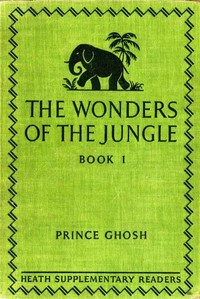
The source record for The Wonders of the Jungle, Book One — Reading Notes measures this digital text at 38,251 words, 2 hr 47 min estimated reading time, and 5 detected text sections.
The text analysis averages about 18.4 words per sentence, while the detected sections provide another way to judge how the source is divided.
Project Gutenberg metadata also associates the work with “Zoology -- Juvenile literature,” connecting these edition facts with the source record’s subject description.
Explore this collection
These alternatives are selected using recorded categories and estimated reading time.
About 168 minutes
Animals
38,429 recorded words. 1 minutes difference from this book's estimate.
View Gutenberg source #69699About 170 minutes
Animals
39,094 recorded words. 3 minutes difference from this book's estimate.
View Gutenberg source #64380About 176 minutes
Animals
40,299 recorded words. 9 minutes difference from this book's estimate.
View Gutenberg source #27463Search stored excerpts and compare books → Choose by your preferences →
Choices use stored catalog measurements. Estimates vary with reading speed. A shared category is a catalog label, not a claim that two books have the same argument or literary quality.
Search reads excerpt text stored with this catalog and links to its associated Gutenberg record. The connection is stored in the site database; this tool does not recheck that every excerpt is word-for-word identical to that external record. Excerpt search does not cover every chapter and does not verify historical publication dates.
Catalog snapshot checked: 2026-09-26. Coverage: 99 public books, 99 available source excerpts.
Calculated from edition completeness, EPUB availability, text structure and catalogue metadata. Not a user rating.
Total of 100 points, scaled to a 2.5-5.0 range. Editions with an empty description or a missing EPUB file are not scored.
Public-domain source text
The source text is kept in the dedicated reader, separate from this catalogue record and its commentary.
Prince Sarath Ghosh’s The Wonders of the Jungle, Book One (1915) was designed as a supplementary reader for grammar-school children, yet it departs from dry textbook conventions by addressing the reader directly as “my dear” and embedding scientific facts within stories. The preface announces an explicit pedagogical aim: to teach natural history through narrative, cultivating imagination and reasoning. The excerpts show that the book delivers on this promise, but also reveal a tension between the catalog subject “Zoology – Juvenile literature” and the actual content, which includes extended anecdotes about village life, moral judgments about animal character, and a strong authorial voice that sometimes overshadows the zoological information.
The catalog classifies this work under “Zoology – Juvenile literature,” but the excerpts demonstrate that the author prioritizes storytelling over systematic taxonomy. In the chapter on deer and antelope, Ghosh explains the difference between horns and antlers using three numbered points—hollow versus solid, presence in both sexes versus males only, and shedding. However, he introduces the topic by saying the buffalo “has many relatives among other animals which also have horns” and calls them “first cousin, second cousin, third cousin.” This familial metaphor is more social than scientific. Similarly, the buffalo chapter culminates in a long, true story about two buffaloes, Baldo and Chando, who rescue a boy from a tiger and later save six Englishmen from a buffalo herd. The zoological content—buffaloes are loyal to their keepers—is embedded in a narrative that reads like a folktale, complete with a reward from a Rajah. The scientific facts are present, but they are subordinate to the narrative arc.
Ghosh writes in a direct, conversational style that frequently addresses the child reader. He uses phrases like “I have told you this story, my dear (and it is a true story)” and “I am sure you will be delighted to hear about it.” This voice is consistent across chapters, creating a sense of a knowledgeable uncle or teacher speaking directly to the child. The cultural setting is explicitly Indian: the stories involve a Rajah, a little Prince, village boys named Gulab, Baldo, and Chando, and Englishmen who are helpless against buffaloes. The author assumes a familiarity with Indian village life—ponds, plowing, hay, and ditches—which may be unfamiliar to readers outside that context. This cultural specificity is not indicated in the catalog subjects, which list only “Zoology – Juvenile literature” and “general-literature.” The book is as much a window into early 20th-century Indian rural life as it is a zoology primer.
The preface explicitly states that one purpose of the book is “to teach a moral from the study of animals.” The excerpts bear this out. In the buffalo story, the moral is that even a furious buffalo will obey a little boy it loves, and that loyalty is rewarded. The author also notes that the tiger, often considered the worst animal, is “a better husband and father than many men,” and that the tigress’s ferocity stems from maternal instinct. These are not neutral zoological observations; they are value judgments intended to shape the child’s character. The book thus functions as a moral education tool, using animal examples to teach loyalty, courage, and kindness. This moral dimension is not captured by the catalog subject “Zoology – Juvenile literature,” which suggests a purely factual treatment. Readers expecting a straightforward animal encyclopedia will find instead a hybrid of science, story, and ethics.
Given the excerpts, readers should approach The Wonders of the Jungle, Book One as a period piece that reflects early 20th-century educational philosophy and Indian cultural perspectives. The zoological facts are accurate but selective, and the narrative voice is a central feature. The book is best enjoyed as a storybook with scientific asides, not as a reference work. The full text may contain additional animal chapters and further moral tales, but the pattern established in these excerpts is likely consistent throughout.
Some mornings, I open The Wonders of the Jungle and hear that old, gentle voice explaining a buffalo’s patience, and I think of another shelf, another quiet friend. Wilderness Babies — Key Ideas to Explore shares that same hush—not loud lessons, but small lives unfolding, as if the animals themselves whispered their secrets to the page. A familiar warmth, that’s all.
Build a private reading journal entry for this title.