About 146 minutes
Northern Trails, Book I. — Context and Discussion
Animals
33,402 recorded words. 10 minutes difference from this book's estimate.
View Gutenberg source #10389
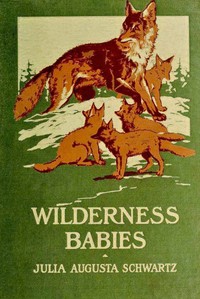
Before opening Wilderness Babies — Key Ideas to Explore, the edition data offers a quick orientation: 31,258 words, 2 hr 16 min estimated reading time, and 16 detected text sections.
The text analysis averages about 16.2 words per sentence, while the detected sections provide another way to judge how the source is divided.
Project Gutenberg metadata also associates the work with “Animals -- Anecdotes,” connecting these edition facts with the source record’s subject description.
Explore this collection
These alternatives are selected using recorded categories and estimated reading time.
About 146 minutes
Animals
33,402 recorded words. 10 minutes difference from this book's estimate.
View Gutenberg source #10389About 153 minutes
Animals
35,146 recorded words. 17 minutes difference from this book's estimate.
View Gutenberg source #22129About 167 minutes
Animals
38,251 recorded words. 31 minutes difference from this book's estimate.
View Gutenberg source #24852Search stored excerpts and compare books → Choose by your preferences →
Choices use stored catalog measurements. Estimates vary with reading speed. A shared category is a catalog label, not a claim that two books have the same argument or literary quality.
Search reads excerpt text stored with this catalog and links to its associated Gutenberg record. The connection is stored in the site database; this tool does not recheck that every excerpt is word-for-word identical to that external record. Excerpt search does not cover every chapter and does not verify historical publication dates.
Catalog snapshot checked: 2026-09-26. Coverage: 99 public books, 99 available source excerpts.
Calculated from edition completeness, EPUB availability, text structure and catalogue metadata. Not a user rating.
Total of 100 points, scaled to a 2.5-5.0 range. Editions with an empty description or a missing EPUB file are not scored.
Public-domain source text
The source text is kept in the dedicated reader, separate from this catalogue record and its commentary.
The catalog subject 'Animals -- Anecdotes' suggests a collection of brief, factual tales, but the excerpts from Julia Augusta Schwartz's Wilderness Babies reveal a more deliberate narrative structure. Each chapter is titled with a descriptive epithet—'The Timid One' for the rabbit, 'The Best Builder' for the beaver—rather than a species name, framing each animal as a character with a defining trait. The introduction further sets expectations by describing 'baby mammals of the wilderness' learning 'to take care of themselves,' implying a focus on development and survival. Yet the rabbit excerpt shows a tension between scientific observation and storytelling: precise details about five toes on fore-paws and four on hind-paws sit alongside scenes of bunnies 'dancing on his hind-legs all alone in the moonlight.' This blend raises questions about how Schwartz uses anecdote to convey natural history.
Schwartz's chapter titles avoid scientific names in favor of epithets that highlight a single attribute: 'The One with a Pocket' (opossum), 'The One That Eats Grass in the Sea' (manatee), 'The Fiercest One' (wolf). This strategy personifies each animal by reducing it to a dominant characteristic, which aligns with the anecdotal catalog subject but risks oversimplification. In the rabbit chapter, the epithet 'The Timid One' is borne out by the excerpt's repeated emphasis on alertness and flight: the bunnies 'sat as still as stones' at a fox's tread and 'bounded away in a race for life' when seen. However, the same passage also shows the bravest bunny 'dancing on his hind-legs all alone in the moonlight,' a moment of boldness that complicates the label. The epithet thus serves as a narrative hook rather than a complete description, inviting readers to discover exceptions.
The rabbit excerpt embeds natural history details within action sequences rather than presenting them as static facts. For instance, the bunnies' sensory vigilance is shown through their behavior: 'they kept twitching their ears forward and back' while nibbling, and 'every minute or two each one paused to sit erect, and roll his bright eyes in all directions.' Physical traits emerge organically—'They had five toes on each fore-paw and four on each hind-paw'—during a description of stretching. Seasonal changes are woven into the narrative: summer brings 'winged ticks' that drive bunnies to hide under skunk cabbages, while winter makes escape harder because 'they could not run so fast through the soft snow.' This technique makes the information memorable but also blurs the line between observed fact and invented scenario, as the reader cannot always distinguish which details are generalized and which are specific to this particular litter.
Danger is a recurring structural device in the rabbit excerpt, shaping both the bunnies' daily routines and the chapter's dramatic arc. The narrative is punctuated by threats: a fox, a wild-cat, a hawk, a dog, a snake, a weasel. Each encounter triggers a specific response—freezing, bounding, hiding—that demonstrates survival instincts. The bravest bunny's near-escape from a weasel with 'a lame foot from his last fight' introduces an element of chance that feels more like storytelling than natural history. The excerpt does not explain whether such luck is typical or exceptional, leaving the reader to wonder how representative these anecdotes are. The cumulative effect is a portrait of constant vigilance, but the reliance on narrow escapes may exaggerate the frequency of peril for dramatic effect.
Readers approaching Wilderness Babies through its catalog subject should be aware that Schwartz's anecdotes are neither strict natural history nor pure fiction. The excerpts suggest a hybrid form where scientific observation is filtered through a narrative lens that prioritizes engagement over completeness. Pay attention to how each chapter's epithet shapes the selection of details, and note where the text shifts from general behavior to specific incidents. The illustrations by John Huybers, mentioned in the front matter, likely reinforce this blend of accuracy and charm.
I’ve held both of these volumes close over the years, noting how Wilderness Babies grants its young animals a tender inwardness, much as the fly’s author does, yet each keeps a naturalist’s honesty about the world’s small cruelties. There’s a sturdy kinship there, a shared patience for watching quietly. Even now, that old rabbit’s trembling nose and the fly’s short life seem to whisper one truth: all creatures carry their own brave story. The Life of the Fly; With Which are Interspersed Some Chapters of Autobiography — Context and Discussion sits beside it on my shelf, a gentle companion in that same hush.
Build a private reading journal entry for this title.