About 146 minutes
Northern Trails, Book I. — Context and Discussion
Animals
33,402 recorded words. 7 minutes difference from this book's estimate.
View Gutenberg source #10389
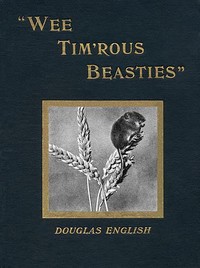
For "Wee Tim'rous Beasties": Studies of Animal life and Character — Themes and Context, the stored edition analysis reports 35,146 words, 2 hr 33 min estimated reading time, and 6 detected text sections.
The text analysis averages about 14.8 words per sentence, while the detected sections provide another way to judge how the source is divided.
Project Gutenberg metadata also associates the work with “Animals,” connecting these edition facts with the source record’s subject description.
Explore this collection
These alternatives are selected using recorded categories and estimated reading time.
About 146 minutes
Animals
33,402 recorded words. 7 minutes difference from this book's estimate.
View Gutenberg source #10389About 167 minutes
Animals
38,251 recorded words. 14 minutes difference from this book's estimate.
View Gutenberg source #24852About 168 minutes
Animals
38,429 recorded words. 15 minutes difference from this book's estimate.
View Gutenberg source #69699Search stored excerpts and compare books → Choose by your preferences →
Choices use stored catalog measurements. Estimates vary with reading speed. A shared category is a catalog label, not a claim that two books have the same argument or literary quality.
Search reads excerpt text stored with this catalog and links to its associated Gutenberg record. The connection is stored in the site database; this tool does not recheck that every excerpt is word-for-word identical to that external record. Excerpt search does not cover every chapter and does not verify historical publication dates.
Catalog snapshot checked: 2026-09-26. Coverage: 99 public books, 99 available source excerpts.
Calculated from edition completeness, EPUB availability, text structure and catalogue metadata. Not a user rating.
Total of 100 points, scaled to a 2.5-5.0 range. Editions with an empty description or a missing EPUB file are not scored.
Public-domain source text
The source text is kept in the dedicated reader, separate from this catalogue record and its commentary.
Douglas English opens his collection with a mouse caught in a trap, recalling the Latin taunt Mus ridiculus—a phrase that sets the tone for these studies of small, often overlooked creatures. The narrative voice is precise and unsentimental, blending natural history with a storyteller's eye for drama. English, a Fellow of the Royal Photographic Society, illustrates the volume with his own photographs of living animals, grounding the text in direct observation.
The book's structure moves between species, each chapter focusing on a different animal: the field vole, house sparrow, dormouse, purple emperor butterfly, harvest mouse, and others. The excerpts reveal a pattern of movement between scenes—from hedgerow to cornfield, from night to day—and a recurring attention to the sensory world of each creature, especially sound and scale.
English repeatedly renders the world from an animal's perspective, where sound carries different meanings. The stoat's approach is a "stealthy swish" audible twenty yards away; the rat's is a "blundering four-footed crescendo," as distinct to mouse-ears as horse hoofs to a human. The harvest mouse, by contrast, can "thread the avenues in perfect silence." This auditory landscape is matched by a keen sense of scale: the cornfield becomes a forest of "pygmy trees," and the mouse's tail wraps around stalks as if they were "passed through a gauge." English's descriptions consistently emphasize proportion and movement, making the miniature world feel expansive.
Across the excerpts, a pattern of predator and prey emerges, often rendered with stark economy. A mouse's brother vanishes "skywards" in a "grey, slanting ghost-swish"; a stoat passes "with its mouth too full to snap." These moments are not lingered upon but dropped into the narrative, creating a sense of constant risk. The harvest mouse's response to any footstep—running up the nearest cornstalk—is described as "invariable," a routine of survival. Even the weasel's leap is foiled by a tendril of convolvulus, a detail that underscores the precariousness of the hunt. English avoids anthropomorphism, instead presenting these encounters as matter-of-fact events in a landscape of threat.
The cornfield is the central setting in the harvest mouse chapter, and English treats it as a dynamic environment that changes with the season. The corn begins as "uncertain green," then turns to golden yellow, and finally "borrowed the copper radiance of a dying day." The mouse's joy is tied to the crop's growth: "It was with the first budding and ripening of the young corn that the harvest mouse tasted the true joy of living." The arrival of sparrows—"a thousand unkempt, shrieking hooligans"—disrupts this idyll, forcing the mouse into the undergrowth. English uses the field's transformation to structure the chapter, linking the animal's behavior to the agricultural calendar.
English's narrator occasionally steps back with a wry or direct comment. In the mouse trap scene, the trapped mouse reflects that "there are some things which, from a mouse standpoint, will not bear repetition." Later, a pheasant is shot "as it crossed the path in front of him, but we must not say anything about that." These asides create a subtle distance between the observer and the observed, reminding the reader that this is a human account. Yet the prose remains grounded in sensory detail, never veering into fantasy. The result is a tone that is both intimate and analytical, characteristic of early twentieth-century natural history writing.
Readers will find that English's studies reward attention to small details—the way a mouse's tail grips a stalk, the sound of a stoat in the grass, the color of ripening corn. The book does not offer a systematic natural history but rather a series of vivid, episodic portraits. Approaching each chapter as a self-contained scene, with its own rhythm and point of view, allows the work's observational strengths to emerge without expecting a continuous narrative.
I keep thinking about how that old book made me slow down and watch the small rustlings under the hedgerow—mice, voles, all living their quiet, urgent hours. Reading it felt less like learning and more like remembering something gentle. Somewhere in that same unhurried feeling, I stumbled onto Wilderness Babies — Key Ideas to Explore, and it stayed with me in a similar way, soft and lingering.
Answer a few questions and save a private reflection on this device.