About 153 minutes
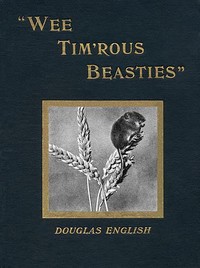
"Wee Tim'rous Beasties": Studies of Animal life and Character — Themes and Context
Animals
35,146 recorded words. 7 minutes difference from this book's estimate.
View Gutenberg source #22129
The catalog record for Northern Trails, Book I. — Context and Discussion provides practical reading context through 33,402 words, 2 hr 26 min estimated reading time, and 3 detected text sections.
The text analysis averages about 31.3 words per sentence, while the detected sections provide another way to judge how the source is divided.
Project Gutenberg metadata also associates the work with “Animals -- Anecdotes,” connecting these edition facts with the source record’s subject description.
Explore this collection
These alternatives are selected using recorded categories and estimated reading time.
About 153 minutes
Animals
35,146 recorded words. 7 minutes difference from this book's estimate.
View Gutenberg source #22129About 136 minutes
Animals
31,258 recorded words. 10 minutes difference from this book's estimate.
View Gutenberg source #55704About 167 minutes
Animals
38,251 recorded words. 21 minutes difference from this book's estimate.
View Gutenberg source #24852Search stored excerpts and compare books → Choose by your preferences →
Choices use stored catalog measurements. Estimates vary with reading speed. A shared category is a catalog label, not a claim that two books have the same argument or literary quality.
Search reads excerpt text stored with this catalog and links to its associated Gutenberg record. The connection is stored in the site database; this tool does not recheck that every excerpt is word-for-word identical to that external record. Excerpt search does not cover every chapter and does not verify historical publication dates.
Catalog snapshot checked: 2026-09-26. Coverage: 99 public books, 99 available source excerpts.
Calculated from edition completeness, EPUB availability, text structure and catalogue metadata. Not a user rating.
Total of 100 points, scaled to a 2.5-5.0 range. Editions with an empty description or a missing EPUB file are not scored.
Public-domain source text
The source text is kept in the dedicated reader, separate from this catalogue record and its commentary.
The preface of Northern Trails, Book I immediately establishes a defensive, evidence-based tone. William J. Long insists that every incident in the book is “founded squarely upon personal and accurate observation,” even when shaped into a connected story. He singles out a wolf killing a caribou by snapping at the chest and heart—a detail challenged by critics—and rebuts their objections by questioning their methods: one critic, he claims, has no personal knowledge of wolves; another gained experience only while hunting them. This opening frames the book as both a natural history and a polemic, urging readers to weigh the author’s field observations against armchair skepticism.
The preface does more than defend a controversial wolf attack. It sets a contract with the reader: Long promises that “not one trait or habit mentioned is not true to animal life.” He distinguishes his method—patient watching, creeping near, winning confidence—from the “barbaric records of slaughter” he attributes to his critics. For a first reading, this preface primes you to attend to specific behavioral details and to consider how the author weaves them into narrative. It also reveals that the wolf story is a flashpoint; you may want to note how later passages handle predation.
In the middle excerpt, the caribou migration is described with precise seasonal and behavioral markers: cows with “small pointed horns, more deadly by far than the stags’ cumbersome antlers,” and fawns trotting after them. The wolves cross their trails but do not attack, because “with plenty of small game everywhere, all wolves are minded to go quietly about their own business.” This restraint contrasts with the later wolf-stag encounter. The passage also introduces the cubs’ perspective—their “constant wonder” at the caribou’s numbers—and the mother wolf’s control. The prose shifts between broad migration patterns and close-up details, such as the stags’ “swollen necks and fierce red eyes.”
When the stags appear in October, the wolves must “stand aside” or circle prudently. The excerpt describes a repeated ritual: a stag charges, the wolves scatter and sit “on their tails in a solemn circle,” then vanish. The mother wolf watches for a chance at the hamstring, but the stag is “too tough.” The passage balances menace and restraint—the wolves could kill but do not. Long attributes a kind of study or amusement to them: “as if studying the strange beast.” This scene, read alongside the preface, exemplifies the kind of observation Long defends: a wolf’s near-snap at the hock is described in anatomical detail, yet the outcome is non-lethal, reinforcing the author’s claim that wolves do not always kill when they could.
Long frequently uses phrases like “as if at a silent command” or “trying perhaps to puzzle it out,” which attribute inner states to animals. The excerpts do not resolve whether these are metaphorical or literal claims. A first reader should note that the author’s voice is confident but not omniscient: he reports what he saw and infers motives cautiously. The preface’s insistence on accuracy invites scrutiny of such phrases. The excerpts also show a pattern of alternating between wolf and caribou perspectives, giving each species agency. This structural choice—moving from the mother wolf’s caution to the stag’s fury—creates a balanced view of predator-prey dynamics.
These excerpts reveal a book that is as much about the method of watching as about the animals watched. Long’s defensive preface asks you to trust his field experience, while the caribou and wolf scenes demonstrate his narrative craft—turning observations into tense, almost ritualistic encounters. As you read, compare the preface’s promises with the text’s details, and note where Long lets behavior speak for itself versus where he adds interpretation. The result is a work that rewards attention to both its natural history and its storytelling choices.
I keep thinking about how Long's insistence on watching—really watching—the caribou and the wolf leaves a quiet ache behind. It's that patient attention, the way a landscape slowly reveals itself. Flipping through Animal life of the British Isles — Reading Notes reminded me of that same feeling, like recognizing an old, familiar quietness in a new room.
Create a short personal record of your experience with this book.