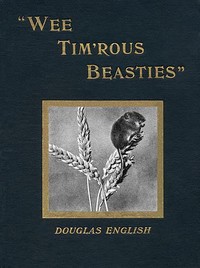
About 186 minutes
A Book of Nimble Beasts: Bunny Rabbit, Squirrel, Toad, and "Those Sort of People" — Key Ideas to Explore
Animals
42,552 recorded words. 1 minutes difference from this book's estimate.
View Gutenberg source #55097
For The Secret Trails — Themes and Context, the stored edition analysis reports 42,342 words, 3 hr 5 min estimated reading time, and 5 detected text sections.
The text analysis averages about 20.0 words per sentence, while the detected sections provide another way to judge how the source is divided.
Project Gutenberg metadata also associates the work with “Animals -- Anecdotes,” connecting these edition facts with the source record’s subject description.
Explore this collection
These alternatives are selected using recorded categories and estimated reading time.
About 186 minutes
Animals
42,552 recorded words. 1 minutes difference from this book's estimate.
View Gutenberg source #55097About 176 minutes
Animals
40,299 recorded words. 9 minutes difference from this book's estimate.
View Gutenberg source #27463About 176 minutes
Animals
40,281 recorded words. 9 minutes difference from this book's estimate.
View Gutenberg source #60659Search stored excerpts and compare books → Choose by your preferences →
Choices use stored catalog measurements. Estimates vary with reading speed. A shared category is a catalog label, not a claim that two books have the same argument or literary quality.
Search reads excerpt text stored with this catalog and links to its associated Gutenberg record. The connection is stored in the site database; this tool does not recheck that every excerpt is word-for-word identical to that external record. Excerpt search does not cover every chapter and does not verify historical publication dates.
Catalog snapshot checked: 2026-09-26. Coverage: 99 public books, 99 available source excerpts.
Calculated from edition completeness, EPUB availability, text structure and catalogue metadata. Not a user rating.
Total of 100 points, scaled to a 2.5-5.0 range. Editions with an empty description or a missing EPUB file are not scored.
Public-domain source text
The source text is kept in the dedicated reader, separate from this catalogue record and its commentary.
Charles G. D. Roberts's The Secret Trails (1916) opens with a community of Welsh sectarians on Lonesome Water, whose pigs are deemed inferior. The prose immediately establishes a pattern: human concerns are framed with dry irony—the villagers' self-satisfaction is the sole fly in their ointment—while animal perception is rendered through sensory detail. When the boar wanders, Roberts describes not motive but sensation: the air smells different, the forest calls. This restraint marks the collection's approach to wildness.
Roberts's vocabulary favors concrete, tactile nouns and verbs over abstraction. A fence is a 'zigzag structure of rough poles'; a steer 'breasted them down almost without an effort.' The language is physical, grounded in the work of farming and the heft of bodies. When Buck the ox breaks bounds, the prose shifts: 'He had a strange, new sense of freedom, of restraint removed.' The abstraction is earned by the preceding physical struggle. Roberts avoids sentimental gloss—the ox does not think, but the reader feels the change through his lifted head and wide nostrils.
Human speech in the excerpts is sparse but pointed. The villagers speak in collective decisions—'the breed must be severely improved'—not in individual voices. This flattening underscores their insularity. In contrast, the animals communicate through lowing, whining, and snorting. When Buck 'lowed coaxingly to his partner,' the verb carries a social weight that the human dialogue lacks. Roberts uses animal sounds as dialogue, giving them emotional nuance without attributing human language.
Roberts describes animal action with a precision that suggests observation rather than projection. Buck does not rebel; he 'hooked impatiently at the bars' and 'butted heavily at the fence.' The cause-and-effect is mechanical: a rail falls, it strikes his nose, he flares up. The author lets behavior speak for itself. When Star follows through the gap, it is not loyalty but imitation: 'stared irresolutely for a few seconds, then followed.' The description of Buck sniffing the air—'drinking deep the chill, keen-scented air'—emphasizes sensory experience over interiority.
The opening story establishes a pattern: human order (the village council, the fence, the yoke) is fragile, and animal impulse breaks through. Roberts structures the action around thresholds—the pasture bars, the gap in the fence, the road into the forest. Each crossing is described with physical detail: the top rail 'lifted easily,' the cross-stake 'half-rotted through.' The human absence (the owner dead by a falling branch) is revealed indirectly, through the dog's whining. This structural choice keeps the focus on the animals' experience of a suddenly ungoverned world.
Readers attentive to Roberts's craft will note how he balances scientific observation with narrative momentum. The animals are never merely symbols, nor are they anthropomorphized beyond their physical capabilities. The secret trails of the title may be literal paths through the woods, but they also trace the line between domestication and wildness—a line Roberts draws with a naturalist's eye and a storyteller's restraint.
That editorial note on Roberts’s quiet, precise animal worlds stayed with me, especially how restraint makes feeling deeper. It reminded me of an old manual on house flies I once leafed through, where even the smallest, most ordinary creature gets observed with that same patient, unsentimental care. There’s a strange comfort in that shared attention. The House Fly and How to Suppress It — Story, Setting & Ideas lingers similarly, I found.
A brief reflection can help important ideas stay with you longer.