About 185 minutes
The Secret Trails — Themes and Context
Animals
42,342 recorded words. 1 minutes difference from this book's estimate.
View Gutenberg source #34454
The source record for A Book of Nimble Beasts: Bunny Rabbit, Squirrel, Toad, and "Those Sort of People" — Key Ideas to Explore measures this digital text at 42,552 words, 3 hr 6 min estimated reading time, and 8 detected text sections.
The text analysis averages about 18.1 words per sentence, while the detected sections provide another way to judge how the source is divided.
Project Gutenberg metadata also associates the work with “Animals -- Juvenile literature,” connecting these edition facts with the source record’s subject description.
Explore this collection
These alternatives are selected using recorded categories and estimated reading time.
About 185 minutes
Animals
42,342 recorded words. 1 minutes difference from this book's estimate.
View Gutenberg source #34454About 196 minutes
Animals
44,916 recorded words. 10 minutes difference from this book's estimate.
View Gutenberg source #22311About 176 minutes
Animals
40,299 recorded words. 10 minutes difference from this book's estimate.
View Gutenberg source #27463Search stored excerpts and compare books → Choose by your preferences →
Choices use stored catalog measurements. Estimates vary with reading speed. A shared category is a catalog label, not a claim that two books have the same argument or literary quality.
Search reads excerpt text stored with this catalog and links to its associated Gutenberg record. The connection is stored in the site database; this tool does not recheck that every excerpt is word-for-word identical to that external record. Excerpt search does not cover every chapter and does not verify historical publication dates.
Catalog snapshot checked: 2026-09-26. Coverage: 99 public books, 99 available source excerpts.
Calculated from edition completeness, EPUB availability, text structure and catalogue metadata. Not a user rating.
Total of 100 points, scaled to a 2.5-5.0 range. Editions with an empty description or a missing EPUB file are not scored.
Public-domain source text
The source text is kept in the dedicated reader, separate from this catalogue record and its commentary.
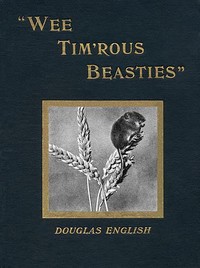
Douglas English’s A Book of Nimble Beasts follows a calendar structure, with each month introducing a different creature or topic—from bats in January to the pygmy shrew in December. The book interleaves factual descriptions with short stories, such as the sand-wasp Spinipes’s laborious nest-building and the misadventures of Bartimæus. English, a photographer, includes over 200 illustrations from his own photographs of living animals, and the text often directs the reader’s attention to visual details, like the “eye-markings” on butterfly wings.
The book is organized by month, beginning with “Something About Bats” in January and ending with “The Pygmy Shrew” on Boxing Day. Each chapter stands alone, but together they create a seasonal rhythm. For instance, February covers tadpoles, March discusses animals’ nests, and April turns to beetles. This structure allows English to move between straightforward natural history and more imaginative pieces, such as the Valentine’s Day entry “A Frog He Would A-Wooing Go,” which blends courtship behavior with a playful narrative. The calendar framework gives the reader a sense of progression through the year, though the chapters vary in tone and depth.
In “Spinipes the Sand-Wasp,” English presents a detailed account of a solitary wasp’s life cycle. The narrative follows Spinipes as she digs a burrow, hunts grubs, and seals the shaft. English describes her actions with precision: “She sank five other curving shafts and built five towers to guard them.” The text emphasizes the rigidity of instinct—when a human hand adds alien grubs to her store, she rejects them, “for neither she nor other of her kind had wit to forge, or mend, a link in instincts broken chain.” The passage ends with the wasp’s death and the emergence of her offspring, noting the cycle’s repetition “an æon back” and questioning “An æon hence—who knows?”
The July chapter, “Pictures on Butterflies’ Wings,” shifts to a more observational mode. English points out that common butterflies and moths have “queer little pictures on their wings ready made—real pictures I mean, faces and animals and things like that.” He introduces the concept of eye-markings, noting their presence in birds, fish, and even leopards. The text encourages readers to find these patterns, describing them as “puzzle pictures, like those you get in crackers.” This section exemplifies English’s method of combining scientific observation with a sense of play, inviting the reader to look closely at the natural world.
English frequently shifts between factual exposition and narrative vignettes. For example, the chapter “In Weasel Wood” (Lammas Day) opens with a description of a weasel’s posture: “He held himself with an air, his body arched, one broad white pad uplifted, his tail curved decorously.” This image is both precise and slightly anthropomorphic. Elsewhere, the text moves from the life cycle of a toad to a dialogue between frogs, as in “A Frog He Would A-Wooing Go,” where the Green Toad remarks, “That? that’s not French.” These shifts keep the reader engaged, though the transitions can be abrupt. The book’s structure—alternating between months and topics—reinforces this sense of movement.
Readers approaching A Book of Nimble Beasts should expect a mix of direct observation and storytelling, with English’s photographs grounding the more fanciful passages. The book rewards those who read it in order, as the seasonal progression gives context to each creature’s appearance. However, individual chapters can be enjoyed on their own, making it suitable for browsing. Pay attention to the recurring theme of instinct versus intervention, especially in the wasp and frog narratives, and to the way English uses visual cues—both in his text and his images—to guide the reader’s eye.
That rainy afternoon, I kept returning to the bat chapter in A Book of Nimble Beasts, its quiet world of hidden flight. The same patient curiosity later drifted me toward The Wonders of the Jungle, Book Two — Story, Setting & Ideas, where the undergrowth felt just as alive, just as gently observed. One book simply left the door open for the other.
Answer a few questions and save a private reflection on this device.