About 203 minutes
Animal portraiture — Key Ideas to Explore
Animals
46,553 recorded words. 8 minutes difference from this book's estimate.
View Gutenberg source #71126
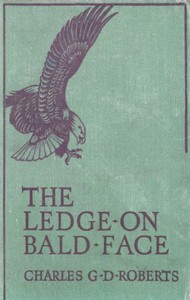
The source record for The Ledge on Bald Face — Inside the Classic measures this digital text at 48,436 words, 3 hr 31 min estimated reading time, and 6 detected text sections.
The text analysis averages about 18.1 words per sentence, while the detected sections provide another way to judge how the source is divided.
Project Gutenberg metadata also associates the work with “Animals -- Anecdotes,” connecting these edition facts with the source record’s subject description.
Explore this collection
These alternatives are selected using recorded categories and estimated reading time.
About 203 minutes
Animals
46,553 recorded words. 8 minutes difference from this book's estimate.
View Gutenberg source #71126About 196 minutes
Animals
44,916 recorded words. 15 minutes difference from this book's estimate.
View Gutenberg source #22311About 235 minutes
Animals
54,044 recorded words. 24 minutes difference from this book's estimate.
View Gutenberg source #29839Search stored excerpts and compare books → Choose by your preferences →
Choices use stored catalog measurements. Estimates vary with reading speed. A shared category is a catalog label, not a claim that two books have the same argument or literary quality.
Search reads excerpt text stored with this catalog and links to its associated Gutenberg record. The connection is stored in the site database; this tool does not recheck that every excerpt is word-for-word identical to that external record. Excerpt search does not cover every chapter and does not verify historical publication dates.
Catalog snapshot checked: 2026-09-26. Coverage: 99 public books, 99 available source excerpts.
Calculated from edition completeness, EPUB availability, text structure and catalogue metadata. Not a user rating.
Total of 100 points, scaled to a 2.5-5.0 range. Editions with an empty description or a missing EPUB file are not scored.
Public-domain source text
The source text is kept in the dedicated reader, separate from this catalogue record and its commentary.
The opening story, "The Ledge on Bald Face," establishes a distinctive voice through its description of the mountain's "ashen pallor" and the "interminable leagues of cedar swamp." The prose is deliberate and sensory, emphasizing scale and isolation. Roberts alternates between such expansive, almost geological observations and tightly focused action, as when a dog shakes its victim "as a terrier shakes a rat." This contrast in pace—from the slow accumulation of landscape detail to sudden, violent movement—recurs throughout the volume.
The excerpts reveal two distinct registers. In the title story, the narrator adopts a formal, almost documentary tone: the trail is "high, nerve-testing," the eagles live in "haughty isolation." Later, in the Jim the police dog serial, the dialogue is rendered in dialect: "What's that bit o' paper ye found under him, Tug?" and "I'll hev to go after them, Andy." The contrast is sharp. The omniscient narrator of the nature passages gives way to a more vernacular, scene-bound voice when characters speak. This shift is not merely cosmetic—it signals a change in narrative distance. The reader moves from observing a landscape to overhearing a community's suspicions and fears.
Roberts controls tempo by layering descriptive clauses before a decisive action. In the ledge passage, the mountain's history is given in a long, periodic sentence before the trail is even mentioned. Then the ledge itself is described in a series of measured observations. By contrast, the murder investigation accelerates through short, exclamatory lines: "We'll ketch him!" "We'll string him up!" The dog Jim's behavior—digging under a stone, then reluctantly obeying—introduces a pause that delays the chase. This interruption of the main action by a seemingly minor detail (a possible woodchuck hole) creates a rhythm of suspense and release.
Certain details recur across the excerpts, linking the animal and human narratives. The eagle's nest, "accessible to no one without wings," echoes the isolation of the mountain itself. Later, the dog Jim is described as having "shaggy black form" and "long white teeth"—physical traits that ground him in the same wild world. The blood-stained paper found under the body becomes a plot token, but its mention is brief; Roberts does not dwell on it. Instead, he lets the crowd's reaction and the deputy's secrecy carry the weight. These repeated motifs—inaccessible heights, animal physicality, withheld evidence—create a cohesive texture across the collection's varied stories.
Readers attentive to language will notice how Roberts uses sentence length to mirror terrain: long, winding constructions for the ledge, short bursts for pursuit. The dialect passages reward slow reading, as the characters' speech reveals social hierarchies and unspoken tensions. The volume is best approached not as a single narrative but as a series of experiments in pace and perspective, unified by a sharp eye for the natural world and the creatures—human and otherwise—that move through it.
Reading about the patrol dog’s quiet watchfulness on that ledge brought back my own evenings alone in the woods, listening. There is a particular stillness in this book, a patient waiting between the hunt and the breath. Anecdotes of Big Cats and Other Beasts — Text and Context held that same unhurried pulse, the sense of being watched by something older than the page.
Capture what you thought, learned, and would like to remember.