About 434 minutes
The winners in life's race — Edition Insights
Animals
99,811 recorded words. 73 minutes difference from this book's estimate.
View Gutenberg source #72898
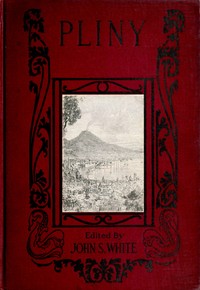
The source record for The Boys' and Girls' Pliny Being parts of Pliny's "Natural History" edited for boys and girls, with an Introduction — Reading Companion measures this digital text at 116,591 words, 8 hr 27 min estimated reading time, and 14 detected text sections.
The text analysis averages about 29.0 words per sentence, while the detected sections provide another way to judge how the source is divided.
Project Gutenberg metadata also associates the work with “Natural history -- Juvenile literature,” connecting these edition facts with the source record’s subject description.
Explore this collection
These alternatives are selected using recorded categories and estimated reading time.
About 434 minutes
Animals
99,811 recorded words. 73 minutes difference from this book's estimate.
View Gutenberg source #72898About 431 minutes
Animals
98,916 recorded words. 76 minutes difference from this book's estimate.
View Gutenberg source #3422About 424 minutes
Animals
97,298 recorded words. 83 minutes difference from this book's estimate.
View Gutenberg source #17748Search stored excerpts and compare books → Choose by your preferences →
Choices use stored catalog measurements. Estimates vary with reading speed. A shared category is a catalog label, not a claim that two books have the same argument or literary quality.
Search reads excerpt text stored with this catalog and links to its associated Gutenberg record. The connection is stored in the site database; this tool does not recheck that every excerpt is word-for-word identical to that external record. Excerpt search does not cover every chapter and does not verify historical publication dates.
Catalog snapshot checked: 2026-09-26. Coverage: 99 public books, 99 available source excerpts.
Calculated from edition completeness, EPUB availability, text structure and catalogue metadata. Not a user rating.
Total of 100 points, scaled to a 2.5-5.0 range. Editions with an empty description or a missing EPUB file are not scored.
Public-domain source text
The source text is kept in the dedicated reader, separate from this catalogue record and its commentary.
The editor, John S. White, immediately signals his method by including Pliny's original dedication to Emperor Titus, where Pliny asks his friend to “read these things with a brow of indulgence.” This framing invites young readers into a direct, almost personal encounter with an ancient author. The table of contents then reveals a deliberate selection: Book II covers the world and elements, Book III treats human marvels, and Books IV–VI focus on terrestrial animals, domestic animals, and fishes. White omits much of Pliny's mineralogy and botany, instead emphasizing living creatures and natural wonders that would appeal to a youthful audience.
Pliny's opening letter to Titus Vespasian is not merely a formal preface. He describes his work as “a task of no ordinary nature” and asks for leniency, acknowledging that he writes “for the benefit of the public.” White retains this humility, which subtly teaches readers that even authoritative texts come from a human author aware of his limits. The dedication also establishes Pliny's relationship with power: he addresses the future emperor as a friend, blending scholarly deference with personal warmth. For a first-time reader, this section frames the entire book as a conversation between a curious naturalist and a powerful patron, rather than a dry compendium of facts.
The excerpts on oysters and ostriches illustrate White's editorial principle: he selects passages that combine practical information with striking anecdotes. In the oyster section, Pliny notes that some oysters are so large they require “three bites” (the tridacna), and he records the luxury of burying them in snow—a detail that links natural history to Roman dining habits. The ostrich passage, by contrast, emphasizes the bird's paradoxical nature: it “cannot be considered as birds” because it runs rather than flies, yet it lays large eggs and its feathers adorn warriors. White includes Pliny's aside about the ostrich's supposed stupidity in hiding its head, a story that has become proverbial. These choices show that the editor values memorable, even questionable, lore over systematic classification.
Pliny's account of the phoenix is remarkable for its cautious skepticism. He writes, “I am not quite sure that its existence is not all a fable,” and then proceeds to describe the bird in elaborate detail: its golden neck, purple body, azure tail, and 540-year lifespan. He cites the senator Manilius as his source, noting that Manilius claimed the phoenix builds a nest of cassia and incense, dies, and is reborn from a worm. By including this passage, White invites young readers to grapple with the boundary between observation and legend. Pliny does not dismiss the story outright; he presents it as a reported marvel, leaving judgment to the reader. This section models how to engage with ancient texts critically yet respectfully.
White's table of contents reveals a clear pattern: he favors animals with dramatic behaviors (elephants fighting, lions performing feats) and omits lengthy discussions of geography or mineralogy. For instance, Book II includes only eleven chapters out of Pliny's many, focusing on comets, thunder, and notable places like Italy and Britain. The editor also skips Pliny's extensive medical and agricultural advice, except where it overlaps with animal lore (e.g., oyster-shells as a dentifrice). This selectivity means the book reads more like a collection of wonders than a systematic encyclopedia. Readers should expect abrupt transitions and a focus on the extraordinary rather than the everyday. White's introduction, though not excerpted here, likely explains his rationale; the table of contents itself is a guide to his priorities.
As you read, note how often Pliny shifts from sober observation to anecdote or moral commentary. The editor's choices highlight these shifts, making the text feel alive with curiosity. When you encounter a claim that seems improbable—like the ostrich throwing stones—consider what it reveals about Roman attitudes toward nature. White's edition is not a modern science textbook; it is a window into how one ancient mind organized knowledge, and how a Victorian educator made that mind accessible to young readers.
That rainy afternoon, I kept returning to Pliny’s phoenix—how it builds its own funeral pyre, then rises. It reminded me of another old story, cock robin’s end, where justice feels just as strange and circular. I found myself reaching for The Trial and Execution of the Sparrow for Killing Cock Robin — Reading Notes, and the quiet absurdity of both tales lingered together long after the rain stopped.
Build a private reading journal entry for this title.