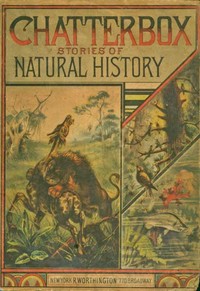
Chatterbox Stories of Natural History — Reading Companion

(0 User reviews)   300
In Category - Animals
Anonymous Project Gutenberg 2007 Not confirmed
Natural history -- Juvenile literature; Children's poetry; Children's stories; Nature stories; Animals -- Juvenile literature Readers of public-domain and historical texts
Project Gutenberg digital edition en

Edition facts

Words 15,704
Reading time 69 min
Text sections 4

For Chatterbox Stories of Natural History — Reading Companion, the stored edition analysis reports 15,704 words, 1 hr 9 min estimated reading time, and 4 detected text sections.

The text analysis averages about 21.8 words per sentence, while the detected sections provide another way to judge how the source is divided.

Project Gutenberg metadata also associates the work with “Natural history -- Juvenile literature,” connecting these edition facts with the source record’s subject description.

This 1880 collection of short prose and verse pieces about animals mixes natural history observation with moral commentary. The anonymous author shifts between factual description, anecdote, and poetry, often addressing the reader directly. The excerpts reveal a didactic yet varied voice that moves from straightforward exposition to dramatic rescue stories and seasonal verse.
Share
Editorial Edition Score 4.5/5

Calculated from edition completeness, EPUB availability, text structure and catalogue metadata. Not a user rating.

How this score is calculated
  • Description quality20 pts
  • Title & short description10 pts
  • Source metadata20 pts
  • Text length15 pts
  • Chapters / structure15 pts
  • EPUB file integrity20 pts

Total of 100 points, scaled to a 2.5-5.0 range. Editions with an empty description or a missing EPUB file are not scored.

Edition quality

Read the Text

Produced by Marilynda Fraser-Cunliffe, Janet Blenkinship and the Online Distributed Proofreading Team at http://www.pgdp.net (This file was made using scans of public domain works in the International Children's Digital Library.)

NEW YORK R. WORTHINGTON 770 BROADWAY.

New York: J. J. Little & Co., Printers, 10 to 20 Astor Place.

+------------------------------------------------------------------------+ |Transcriber's note: There was no Table of Contents in the original book,| |and one has been provided for this version. | +------------------------------------------------------------------------+

THE KING OF THE CASTLE. ZEBRA AND YOUNG. MRS. BRUIN AND FAMILY. LITTLE OWLS. AUROCHS. THE KANGAROO. THE PEACOCK. SWANS. THE SEA LION. A--THE ASS. BADGERS. THE BIRD'S NEST. THE CHAMOIS. JACKO WITH PUSSY'S BONE. MEMBERS OF THE POACHING FRATERNITY. A COW WORKING A PUMP. CARRIER PIGEONS. THE SIASIN, OR ANTELOPE OF INDIA. THE COMMON SNIPE. D--THE DOE. MRS. BUNNY AND FAMILY. THE LYNX. THE SWAN AND THE DRAKE. THE BEAVER. LIONESS AND CUBS. A PET JACK. THE SWALLOW'S NEST. THE BRAVE DOG OF ST. BERNARD. G--THE GIRAFFE. MOTHER-DEER AND BABY. WHOOPING CRANE. THE ELK. TOYS FOR ANIMALS. THE SUCKING-PIG. BELL-RINGERS. THE GUINEA-PIG. J--THE JAY. WAITING. THE ARGUS. THE YOUNG MONKEY. THE CLEVER FOX. TESTING HIS STRENGTH. A WISE DOG. M--THE MANDRILL. SPRING. SUMMER. TIMOTHY. THE BRAVE COCKATOO. HARE TAKING THE WATER. AUTUMN. WINTER. OUR WILD BIRDS. P--THE PELICAN. BLACKBIRDS AND YOUNG. A USEFUL PILOT. JACK. S--THE SWALLOW. A SINGULAR HABIT OF THE WOODCOCK. THE SKY-LARK THE STORY OF A SEAL. THE KING OF THE MOUNTAINS. THE BEE. V--THE VULTURE. MOTHER AND PUPS. THE FRIENDLY TERNS. Y--THE YAK. SHEEP AND LAMBS. THE CAPTIVE SQUIRREL. A STROLL IN THE COUNTRY. THE OTTER. THE MASTIFF. THE CUNNING WOOD-PIGEONS. SEA REPTILES. SWISS MOUNTAIN SCENERY. PARTRIDGE AND YOUNG. THE KINGFISHERS' HOME. RATS CARRYING EGGS UP STAIRS. A HERON ATTACKED BY A HAWK. A HORSE GUARDIAN. BATTLE BETWEEN A FOX AND A SWAN. TOUSY.

THE KING OF THE CASTLE.

As the lion is called the king of beasts, so the eagle is called the king of birds; but except that it is bigger, stronger, and swifter than other birds, there does not seem much reason for the name. It is a mistake to attribute noble or mean qualities to animals or birds, or to think they can do good or bad actions, when they can only do what God has created them to do, and as their instinct teaches.

The most powerful of the eagles is the Golden Eagle, so called because of the rich yellowish-brown bordering to its feathers. It makes its nest in the clefts of the rocky sides of the mountains, and seldom on a tree, unless where one has sprung up in between the clefts, and the tangled roots make a sort of platform. This the eagles cover with sticks, and here they make their house, living in it always, and not only when they lay eggs or have young ones.

If there are eaglets in the nest, the food is at once carried home to them, and the skinning and eating done at home. Eagles are very attentive to their young, and feed them with great care until they are able to take care of themselves.

Mrs. Zebra, standing with her baby by her side, asks proudly of the lookers-on, "Did you ever see such a likeness?" and certainly mother and child are very much alike, striped all over their bodies, from head to foot, and from nose to tail, with the same regular marks of black. Strong and wild by nature, the zebra family are left very much to themselves, which is a source of great happiness to the mother and child in the picture before us. "No! no! my baby is not going to become as tame as the donkey, or to draw carts and carriages like the horse; it is to have its freedom, and go just where it likes all over these large plains;"--so says Mrs. Zebra, and she means it too, for if anybody took the trouble to go all the way to the hot country of Africa, where Mrs. Zebra is at home, and tried to carry off her baby, they would find their journey a vain one, and that she would kick severely, and perhaps break the legs of the person bold enough to take away her darling.

MRS. BRUIN AND FAMILY.

The anonymous compiler of Chatterbox Stories of Natural History (1880) presents animals through a mix of prose vignettes, poems, and direct address to young readers. The opening piece on the golden eagle immediately establishes a pattern: the author corrects a common notion—that the eagle is “king of birds”—by insisting that animals act only by instinct, not moral choice. This rationalist stance, however, coexists with sentimental anecdotes and moralizing verse, creating an uneven but engaging tone.

The excerpts show a work that moves briskly between modes. A factual description of the eagle’s nest is followed by a dramatic account of a cockatoo saving its master from a snake, then by a poem celebrating autumn’s harvest. The author’s voice is that of a knowledgeable but informal educator, occasionally slipping into first-person recollection, as in the hare-swimming episode.

Shifts in Narrative Mode

The collection alternates abruptly between expository prose, first-person anecdote, and rhymed verse. The eagle entry begins with a general claim (“it is a mistake to attribute noble or mean qualities to animals”), then moves to specific nesting habits. In contrast, the cockatoo story is a tense, third-person narrative with dialogue (“Time to rise! time to rise!”). The hare passage shifts to a personal fishing memory, using precise details like “the Dorset Stour below Canford Major.” The seasonal poems adopt a collective “we” and a hymn-like structure. These mode changes are not signaled by headings or transitions; the reader encounters each piece as a discrete unit, with the voice and pace resetting each time.

Direct Address and Didacticism

The author frequently speaks directly to the reader, especially in the bird passages. In “Our Wild Birds,” the narrator says “I dare say you notice that all the birds in this picture have long beaks,” then explains adaptation as evidence of divine design. This instructional tone is consistent: the zebra entry imagines Mrs. Zebra asking “Did you ever see such a likeness?” The poems also instruct, as in “Winter,” which concludes with a prayer: “Lord! all Thy ways are great and good!” The didacticism is not heavy-handed, however; it is often embedded in observation or story, and the author occasionally undercuts moralizing with factual correction, as in the eagle’s opening.

Recurring Details and Structural Patterns

Several patterns recur across the excerpts. The author frequently notes animal behavior that contradicts human assumptions: eagles do not nest only for breeding; hares do not shake themselves like dogs after swimming. Physical descriptions are often tied to function, as with marsh birds’ long beaks. The poems follow a regular seasonal cycle (spring, summer, autumn, winter), each using consistent imagery (grapes and corn for autumn, frost and sledges for winter). The prose pieces vary in length but often end with a moral or natural-history point. The overall structure—short, titled entries in a table of contents—suggests the book was designed for piecemeal reading, perhaps aloud.

Readers approaching Chatterbox Stories of Natural History should expect a miscellany rather than a systematic survey. The anonymous author’s voice is that of a Victorian educator who values both accurate observation and moral instruction. The shifts in pace and mode—from factual to dramatic, from prose to verse—reward reading the entries as independent pieces. Pay attention to how the author uses direct address and first-person recollection to create intimacy, and note the recurring tension between instinct-based behavior and human moral frameworks.

Reading that old collection, I kept noticing how the writer paused over animals the way we linger on a familiar face, mixing plain facts with quiet lessons about patience and courage. It reminded me of sitting with Anecdotes of Big Cats and Other Beasts — Text and Context, where big cats feel less like spectacles and more like fellow creatures carrying their own small stories. That hushed, wondering tone stayed with me long after closing the cover.

There are no reviews for this eBook.

0
0 out of 5 (0 User reviews )

Add a Review

Your Rating *
There are no comments for this eBook.

Reader reflection

How did this book work for you?

Your answers remain private and are stored only in this browser.

Your progress 0 / 10
1

How far have you progressed with this book?

2

What was your overall reaction to the book?

3

Would you recommend this book to another reader?

4

How easy was the book to follow?

Related eBooks