About 179 minutes
Bird Guide: Water Birds, Game Birds, and Birds of Prey East of the Rockies — Background and Themes
Birds
40,953 recorded words. 18 minutes difference from this book's estimate.
View Gutenberg source #46516
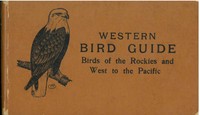
For Western Bird Guide: Birds of the Rockies and West to the Pacific — A Closer Reading, the stored edition analysis reports 45,251 words, 3 hr 17 min estimated reading time, and 11 detected text sections.
The text analysis averages about 17.5 words per sentence, while the detected sections provide another way to judge how the source is divided.
Project Gutenberg metadata also associates the work with “Birds -- West (U.S.),” connecting these edition facts with the source record’s subject description.
Explore this collection
These alternatives are selected using recorded categories and estimated reading time.
About 179 minutes
Birds
40,953 recorded words. 18 minutes difference from this book's estimate.
View Gutenberg source #46516About 169 minutes
Birds
38,749 recorded words. 28 minutes difference from this book's estimate.
View Gutenberg source #46017About 169 minutes
Birds
38,780 recorded words. 28 minutes difference from this book's estimate.
View Gutenberg source #53307Search stored excerpts and compare books → Choose by your preferences →
Choices use stored catalog measurements. Estimates vary with reading speed. A shared category is a catalog label, not a claim that two books have the same argument or literary quality.
Search reads excerpt text stored with this catalog and links to its associated Gutenberg record. The connection is stored in the site database; this tool does not recheck that every excerpt is word-for-word identical to that external record. Excerpt search does not cover every chapter and does not verify historical publication dates.
Catalog snapshot checked: 2026-09-26. Coverage: 99 public books, 99 available source excerpts.
Calculated from edition completeness, EPUB availability, text structure and catalogue metadata. Not a user rating.
Total of 100 points, scaled to a 2.5-5.0 range. Editions with an empty description or a missing EPUB file are not scored.
Public-domain source text
The source text is kept in the dedicated reader, separate from this catalogue record and its commentary.
The Western Bird Guide opens with a striking blend of taxonomic precision and field-note intimacy. The authors immediately establish a dual voice: one that adheres strictly to the American Ornithologists’ Union numbering system and another that invites the reader to personalize the book by marking arrival dates and making crosses beside species seen. This tension between formal classification and hands-on engagement shapes the entire work.
The guide’s language shifts noticeably between species accounts. Some entries, like that of the Western Grebe, are terse and data-heavy—listing measurements, nest descriptions, and ranges. Others, such as the account of the Lewis Woodpecker, introduce vivid color terms (“crimson red face,” “glossy greenish black”) and behavioral notes that slow the pace and draw the reader into observation. These variations in density and tone create a rhythm that rewards both quick reference and leisurely reading.
The guide’s backbone is the A.O.U. checklist, but the authors repeatedly encourage readers to write directly in the book. The preface suggests making “a cross against the name of each bird that you see in your locality” and recording arrival and departure dates at the top of each page. This invitation transforms the volume from a static reference into a living field diary. The language here is practical and direct: “we would suggest that you neatly, and with ink.” The voice is that of an experienced naturalist speaking to a fellow enthusiast, not a distant authority.
This personalization extends to the treatment of subspecies. The authors acknowledge that subspecies “often cause confusion” and recommend identifying them by locality rather than relying solely on plumage details. Such admissions of uncertainty are rare in field guides of the period and signal a humility that tempers the otherwise authoritative tone. The result is a text that feels collaborative, as if the reader is being trained to become a contributor to ornithological knowledge.
The pace of the prose varies markedly across entries. For common or wide-ranging species, the descriptions are often compressed: the Horned Grebe is dispatched in three sentences covering seasonal plumage and food. But for less familiar birds, the writing expands. The account of the Stephens Whip-poor-will, for instance, lingers on its secretive habits: “they are heard much more often than seen,” and their flight is “swift and noiseless, their soft plumage giving forth no sound.” This is not mere data; it is a crafted observation that evokes the bird’s essence.
Similarly, the Red-shafted Woodpecker entry breaks from the standard format to describe foraging behavior—searching for ants “on the ground on the edges of the woods or in open fields”—and includes a detailed color comparison with eastern varieties. The prose becomes almost narrative, contrasting the bird’s habits with those of other woodpeckers. These slower, richer passages stand out against the more telegraphic entries, creating a rhythm that mimics the experience of birding: moments of quick identification punctuated by longer, contemplative watches.
The narrative voice in the Western Bird Guide is not uniform. At times it adopts the clipped, impersonal style of a checklist: “Nest. —A floating mass of decayed rushes… 2 to 5 pale bluish white eggs.” Elsewhere, it slips into a more reflective register. The description of the Poor-will’s plumage as “beautifully blended together” is a subjective judgment, not a neutral fact. The choice to include such aesthetic evaluations reveals the authors’ own wonder and invites the reader to share it.
This dual voice is most apparent in the handling of the Nighthawk group. The Western Nighthawk entry includes a precise field mark—“a white band near the end of the tail”—but also notes that the mark is “very conspicuous when in flight,” a phrase that implies the authors have watched these birds in motion. The Texas Nighthawk is dismissed as “a paler and more of a grayish color than preceding. Habits the same.” The brevity here is almost curt, suggesting that the authors found this subspecies less interesting. Such tonal shifts give the guide a human presence, making it feel less like a dry catalog and more like a conversation with a knowledgeable companion.
Readers will find that the Western Bird Guide rewards both sequential reading and targeted lookup. Pay attention to the entries where the prose slows down—those are the moments when the authors’ own fascination breaks through the taxonomic framework. The guide’s invitation to annotate is not a gimmick; it is central to the book’s design. To use it as intended is to become part of a century-old tradition of citizen science, one that values careful observation and personal record-keeping as much as authoritative knowledge.
There’s a particular stillness in the Western guide’s quiet asides, those moments when the author’s wonder slips past the taxonomy. It reminded me of the softer, unhurried tone in An Introduction to the Birds of Pennsylvania — Reading Companion, where patience feels like part of the practice. Both books let the land speak through the birds, gently.
Answer a few questions and save a private reflection on this device.