About 169 minutes
Indian Birds: Being a Key to the Common Birds of the Plains of India — Context and Discussion
Birds
38,749 recorded words. 10 minutes difference from this book's estimate.
View Gutenberg source #46017
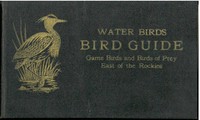
The catalog record for Bird Guide: Water Birds, Game Birds, and Birds of Prey East of the Rockies — Background and Themes provides practical reading context through 40,953 words, 2 hr 59 min estimated reading time, and 9 detected text sections.
The text analysis averages about 15.5 words per sentence, while the detected sections provide another way to judge how the source is divided.
Project Gutenberg metadata also associates the work with “Birds -- United States,” connecting these edition facts with the source record’s subject description.
Explore this collection
These alternatives are selected using recorded categories and estimated reading time.
About 169 minutes
Birds
38,749 recorded words. 10 minutes difference from this book's estimate.
View Gutenberg source #46017About 169 minutes
Birds
38,780 recorded words. 10 minutes difference from this book's estimate.
View Gutenberg source #53307About 165 minutes
Birds
37,768 recorded words. 14 minutes difference from this book's estimate.
View Gutenberg source #64517Search stored excerpts and compare books → Choose by your preferences →
Choices use stored catalog measurements. Estimates vary with reading speed. A shared category is a catalog label, not a claim that two books have the same argument or literary quality.
Search reads excerpt text stored with this catalog and links to its associated Gutenberg record. The connection is stored in the site database; this tool does not recheck that every excerpt is word-for-word identical to that external record. Excerpt search does not cover every chapter and does not verify historical publication dates.
Catalog snapshot checked: 2026-09-26. Coverage: 99 public books, 99 available source excerpts.
Calculated from edition completeness, EPUB availability, text structure and catalogue metadata. Not a user rating.
Total of 100 points, scaled to a 2.5-5.0 range. Editions with an empty description or a missing EPUB file are not scored.
Public-domain source text
The source text is kept in the dedicated reader, separate from this catalogue record and its commentary.
Chester A. Reed designed this pocket guide for a specific predicament: you see a bird you do not recognize, and you want to name it without shooting it. In the preface, he contrasts the “old-time” ornithologist—who shot the bird, took it home, and pored through pages of description—with the modern observer, who must rely on copious notes of markings and behavior. Reed’s solution is a compact reference built around visible traits, habitat, and voice, not museum specimens. The introduction warns that water birds, game birds, and raptors are large, shy, and keen-eyed; studying them demands patience and stealth. “It is this pitting your wits against the cunning of the birds that furnishes one-half of the interest,” he writes, framing field identification as a contest of observation.
Reed’s language is deliberately unadorned, favoring concrete nouns and verbs over literary flourish. A bird’s plumage is described with simple color terms—“white, with black primaries,” “grayish with a few brownish feathers”—and measurements in inches. He uses active verbs: the Limpkin “can run rapidly, having a peculiar mincing gait.” The prose mirrors the act of looking: it points, measures, and compares. For the King Rail, he writes “back handsomely patterned with black, olive-brown and gray; wing coverts reddish-brown; neck and breast, rich cinnamon-brown.” The adjectives are visual, not evaluative. This diction trains the reader to see pattern and hue, not to feel wonder. Reed’s voice is that of a patient instructor, never a poet.
Reed consistently includes a “Notes” section for each species, where he transcribes calls in onomatopoeic strings: the Whooping Crane’s “loud whooping scream,” the Limpkin’s “peculiar wailing ‘whee-ee-eu,’” the Night Heron’s “quark.” These are not literary descriptions but phonetic approximations meant to be recognized in the field. He also notes when a bird is silent or when its voice resembles another species—the Yellow-crowned Night Heron’s notes are “like those of the Black-crowned Night Heron.” By treating voice as a field mark equivalent to plumage or size, Reed gives the reader an auditory handle on identification, especially for secretive or crepuscular birds like rails and herons.
Each species account follows a rigid template: common name, scientific name, length in inches, then a paragraph on plumage, habitat, and behavior. A “Notes” line gives call; a “Nest” line gives site, materials, egg color and size, and season; a “Range” line gives breeding and wintering distribution. This structure is designed for quick scanning in the field. Reed prioritizes the most visible features first—size and color—then moves to context (where and how the bird lives). The repetition of this format across 200+ species creates a consistent mental grid. The reader learns to expect the same categories of information, which speeds comparison between similar birds, such as the Little Brown Crane and the Sandhill Crane.
Reed embeds habitat in nearly every entry, often in the first sentence. The Whooping Crane “frequent[s] the edges of marshes and sloughs” on the prairies; the Limpkin lives “a secluded life in pairs” in Southern Florida swamps; the King Rail is found in freshwater marshes. He notes how habitat affects behavior: cranes are wary because their height lets them see over marsh grass; rails are “excellent runners and are very difficult to start from” cover. These details are not decorative—they are identification cues. A bird seen wading in a coastal marsh is more likely a heron than a crane; a bird skulking in reeds is probably a rail. Reed’s setting descriptions teach the reader to read the landscape as part of the bird’s identity.
Reed’s guide is best used as he intended: carried in the field, consulted while the bird is still in view. Read the entry for a suspected species aloud, checking each claim against what you see. Pay special attention to the Notes and Range lines, which are often the quickest way to eliminate look-alikes. The book rewards patience—the same patience Reed recommends for approaching a wary heron. Let the bird’s own behavior, voice, and surroundings be your primary text; this guide is a key, not a substitute.
I still recall how Chester Reed’s guide taught me to watch a heron’s stillness rather than reach for a net—observation as quiet friendship. Somewhere nearby, on another shelf, sits My pets — Themes and Context, a book that understands the same patient tenderness. Both simply ask us to look, and wait, and let the creature reveal itself.
Build a private reading journal entry for this title.