About 254 minutes
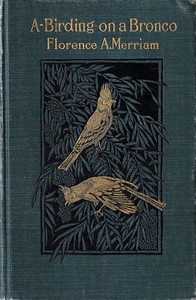
A-Birding on a Bronco — Themes and Context
Birds
58,278 recorded words. 6 minutes difference from this book's estimate.
View Gutenberg source #33410
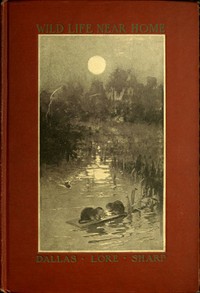
For Wild Life Near Home — Reading Notes, the stored edition analysis reports 56,979 words, 4 hr 8 min estimated reading time, and 8 detected text sections.
The text analysis averages about 20.7 words per sentence, while the detected sections provide another way to judge how the source is divided.
Project Gutenberg metadata also associates the work with “Birds,” connecting these edition facts with the source record’s subject description.
Explore this collection
These alternatives are selected using recorded categories and estimated reading time.
About 254 minutes
Birds
58,278 recorded words. 6 minutes difference from this book's estimate.
View Gutenberg source #33410About 297 minutes
Birds
68,144 recorded words. 49 minutes difference from this book's estimate.
View Gutenberg source #46055About 197 minutes
Birds
45,251 recorded words. 51 minutes difference from this book's estimate.
View Gutenberg source #45918Search stored excerpts and compare books → Choose by your preferences →
Choices use stored catalog measurements. Estimates vary with reading speed. A shared category is a catalog label, not a claim that two books have the same argument or literary quality.
Search reads excerpt text stored with this catalog and links to its associated Gutenberg record. The connection is stored in the site database; this tool does not recheck that every excerpt is word-for-word identical to that external record. Excerpt search does not cover every chapter and does not verify historical publication dates.
Catalog snapshot checked: 2026-09-26. Coverage: 99 public books, 99 available source excerpts.
Calculated from edition completeness, EPUB availability, text structure and catalogue metadata. Not a user rating.
Total of 100 points, scaled to a 2.5-5.0 range. Editions with an empty description or a missing EPUB file are not scored.
Public-domain source text
The source text is kept in the dedicated reader, separate from this catalogue record and its commentary.
Sharp opens his first essay, 'In Persimmon-time,' with a scene of opossums feeding in a persimmon tree, described as 'swinging from the limbs by their long prehensile tails.' The writing is immediate and sensory, grounded in a specific November landscape where the fruit is 'ripe and rimy with frost.' This is not a general natural history but a record of particular encounters, shaped by the author's patient observation and willingness to be surprised.
The book's structure—eighteen chapters, each focused on a season, a creature, or a behavior—invites the reader to follow Sharp through the woods and fields of southern New Jersey. The illustrations by R. Bruce Horsfall, reproduced in the digital edition, complement the text with detailed line drawings that capture posture and habitat.
In 'A Study in Bird Morals,' Sharp recounts how a pair of blue jays tried to distract him from their nest. He describes their behavior with precision: they 'kept close together, and fluttered about, hanging from the twigs head down like chickadees, deliberately biting off bunches of needles'—but their picking was 'all at random.' Sharp recognizes the ruse: 'They were not hunting grubs: they were watching me; and more—they were keeping me watching them.'
This passage is a key to Sharp's method. He does not simply catalogue; he interprets. He notes the jays' 'fearless unconcern' as 'assumed' and praises their 'heroic' self-control. Yet he also admits his own limitations: 'I could not find the nest; so returning the next day, I crept under cover.' The narrative is as much about the observer's learning curve as about the birds' behavior.
In 'Some Snug Winter Beds,' Sharp turns to smaller, less conspicuous life. He describes a meadow mouse's tunnel under the snow, noting how the creature 'had stopped for a meal on his way out'—a detail that implies a story behind the scene. The writing is economical: 'I shivered as the icy flakes fell thicker and faster,' he says, contrasting his own discomfort with the mouse's apparent security.
Sharp avoids anthropomorphism by grounding his observations in physical evidence. He notes the mouse's 'Whitefoot' (a nickname for a deer mouse) and the 'rabbit roads' that crisscross the winter landscape. These chapters reveal his interest in the hidden lives of animals, the 'snug beds' and tunnels that escape casual notice. The reader is invited to look closer, to imagine the world beneath the snow.
'A Bird of the Dark' and 'The Pine-tree Swift' examine species that challenge easy classification. The former describes a bird 'unlike any bird of the light,' likely a nightjar or owl, whose habits Sharp traces through dusk and dawn. He notes its flight: 'It caught at the insects in the air'—a simple, accurate phrase that conveys both motion and purpose.
In 'The Pine-tree Swift,' Sharp observes a bird that 'peeks around the tree-trunks' and is hunted by the sparrow hawk. The chapter is structured around a single encounter, building tension as Sharp waits for the swift to reveal itself. He uses the landscape—'the high, level farm-lands break off into sandbanks'—to set the stage, and his descriptions of light and shadow create a sense of time passing. These chapters show Sharp at his most patient, willing to wait for the animal to act.
Sharp's prose is varied in rhythm and length. He can write a long, flowing sentence that mimics the movement of a bird in flight, or a short, punchy observation that lands like a fact. In 'Feathered Neighbors,' he describes a robin's nest as 'wedged carelessly into the lowest fork of the tree, so that the cats and roving boys could help themselves without trouble'—a wry comment on the vulnerability of urban wildlife.
He also uses dialogue sparingly, as when he quotes a local saying: 'Mus'rattin'' is the title of a chapter on muskrat hunting, and the vernacular gives the book a regional flavor. The essays are not arranged by season but by topic, allowing Sharp to move from a buzzards' banquet to a herring run without losing coherence. Each chapter stands alone, yet together they build a portrait of a place and a mind.
Sharp's essays reward a slow, attentive reading. The digital edition preserves the original illustrations and chapter breaks, making it easy to dip into a single essay or follow the sequence. Readers interested in natural history writing, American literature of the early 1900s, or the craft of observation will find much to admire. The book does not offer a systematic guide to wildlife; it offers something rarer: a record of one man's patient, curious, and often surprised encounters with the creatures near his home.
I've spent many quiet evenings with Dallas Lore Sharp's Wild Life Near Home, watching him notice the blue jay's feigned calm. It feels oddly akin to the gentle patience in The Burgess Bird Book for Children — Context and Discussion, where every creature is met with the same unhurried, wondering gaze—two old friends who simply happen to share a window.
Create a short personal record of your experience with this book.