About 169 minutes
Indian Birds: Being a Key to the Common Birds of the Plains of India — Context and Discussion
Birds
38,749 recorded words. 0 minutes difference from this book's estimate.
View Gutenberg source #46017
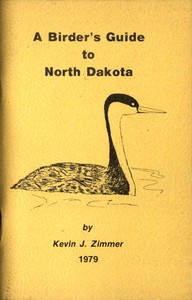
For A Birder's Guide to North Dakota — Text and Context, the stored edition analysis reports 38,780 words, 2 hr 49 min estimated reading time, and 8 detected text sections.
The text analysis averages about 18.3 words per sentence, while the detected sections provide another way to judge how the source is divided.
Project Gutenberg metadata also associates the work with “Birds -- North Dakota -- Geographical distribution,” connecting these edition facts with the source record’s subject description.
Explore this collection
These alternatives are selected using recorded categories and estimated reading time.
About 169 minutes
Birds
38,749 recorded words. 0 minutes difference from this book's estimate.
View Gutenberg source #46017About 165 minutes
Birds
37,768 recorded words. 4 minutes difference from this book's estimate.
View Gutenberg source #64517About 179 minutes
Birds
40,953 recorded words. 10 minutes difference from this book's estimate.
View Gutenberg source #46516Search stored excerpts and compare books → Choose by your preferences →
Choices use stored catalog measurements. Estimates vary with reading speed. A shared category is a catalog label, not a claim that two books have the same argument or literary quality.
Search reads excerpt text stored with this catalog and links to its associated Gutenberg record. The connection is stored in the site database; this tool does not recheck that every excerpt is word-for-word identical to that external record. Excerpt search does not cover every chapter and does not verify historical publication dates.
Catalog snapshot checked: 2026-09-26. Coverage: 99 public books, 99 available source excerpts.
Calculated from edition completeness, EPUB availability, text structure and catalogue metadata. Not a user rating.
Total of 100 points, scaled to a 2.5-5.0 range. Editions with an empty description or a missing EPUB file are not scored.
Public-domain source text
The source text is kept in the dedicated reader, separate from this catalogue record and its commentary.
Kevin J. Zimmer's A Birder's Guide to North Dakota (1979) opens with a preface that credits a network of contributors—Bob Randall, Frank Kelley, his brother Barry, and mentor Jim Lane—establishing the guide as a collaborative effort grounded in field experience. The introduction immediately confronts the state's reputation: "Most people visit North Dakota on their way to someplace else," yet insists that beauty awaits those who explore the prairie, Turtle Mountains, or badlands. This tension between perceived barrenness and actual richness sets the tone for a guide that is both practical and quietly persuasive.
The guide divides North Dakota into four quadrants—Southeastern, Southwestern, Northwestern, and Northeastern—each treated in a dedicated section. Within these, Zimmer drills down to county-level detail, naming specific marshes, hills, and roads. For example, Rush Lake in Cavalier County is described as "a large marsh encompassing several thousand acres," with a list of over thirty shorebird and waterfowl species. The Turtle Mountains and Pembina Hills receive particular attention as well-wooded habitats that host northern rarities like Great Gray Owl and Boreal Chickadee. Zimmer does not merely list sites; he notes practical constraints, such as road conditions limiting access in winter, and advises following plowed roads and good habitat rather than fixed locations.
Zimmer frequently tempers expectation with realism. In the Turtle Mountains, he warns that winter birding offers "a great diversity" but that many species are "decidedly cyclic in their wanderings," and that finding half of the listed species on a given trip would be doing well. Similarly, for Rush Lake, he notes that most shorebirds appear only as transients, even if seen throughout summer. This honesty extends to the state's overall appeal: the introduction admits that "much of the state is anything but scenic" before pivoting to hidden beauty. The guide thus functions as a frank field companion rather than a boosterish travelogue.
Zimmer's prose reflects direct experience and a collaborator's humility. The preface thanks "many others" and anticipates forgetting names after publication—a human touch that underscores the guide's grassroots origins. Directions are precise but flexible: "drive 4.0 miles west from Wales to a point surrounded by marshy inlets" or "you can drive as far as road conditions permit." The text also reveals a binder's mindset, noting that some species "may be more regular than is currently thought, because not enough people bird this area in winter." This blend of specificity, caution, and invitation characterizes the entire work.
Zimmer's guide rewards readers who treat it as a starting point rather than a definitive map. The emphasis on cyclic species, variable road conditions, and under-birded areas invites the binder to contribute observations—a spirit echoed in the request for corrections to future editions. For modern readers, the guide offers a snapshot of late-1970s North Dakota birding, with species lists and site descriptions that remain useful for historical comparison or as a baseline for exploring the state's avian life.
That rainy afternoon, Zimmer’s careful hand-drawn maps smelled faintly of old coffee, and I lingered over his notes on the Turtle Mountains’ aspen groves. His honesty about slow birding days felt like a quiet permission. Later, reaching for something else, I found Ornithological biography, Vol. 3 (of 5) — A Closer Reading, whose patient observations of a single warbler’s habits reminded me of that same unhurried attention.
Build a private reading journal entry for this title.