About 113 minutes
Everyday birds: Elementary studies — Reading Notes
Birds
25,791 recorded words. 11 minutes difference from this book's estimate.
View Gutenberg source #69563
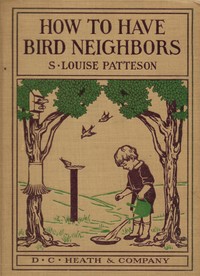
This digital edition of How To Have Bird Neighbors — Story, Setting & Ideas is described by source-level measurements including 28,383 words, 2 hr 4 min estimated reading time, and 5 detected text sections.
The text analysis averages about 15.4 words per sentence, while the detected sections provide another way to judge how the source is divided.
Project Gutenberg metadata also associates the work with “Birds,” connecting these edition facts with the source record’s subject description.
Explore this collection
These alternatives are selected using recorded categories and estimated reading time.
About 113 minutes
Birds
25,791 recorded words. 11 minutes difference from this book's estimate.
View Gutenberg source #69563About 90 minutes
Birds
20,657 recorded words. 34 minutes difference from this book's estimate.
View Gutenberg source #34556About 165 minutes
Birds
37,768 recorded words. 41 minutes difference from this book's estimate.
View Gutenberg source #64517Search stored excerpts and compare books → Choose by your preferences →
Choices use stored catalog measurements. Estimates vary with reading speed. A shared category is a catalog label, not a claim that two books have the same argument or literary quality.
Search reads excerpt text stored with this catalog and links to its associated Gutenberg record. The connection is stored in the site database; this tool does not recheck that every excerpt is word-for-word identical to that external record. Excerpt search does not cover every chapter and does not verify historical publication dates.
Catalog snapshot checked: 2026-09-26. Coverage: 99 public books, 99 available source excerpts.
Calculated from edition completeness, EPUB availability, text structure and catalogue metadata. Not a user rating.
Total of 100 points, scaled to a 2.5-5.0 range. Editions with an empty description or a missing EPUB file are not scored.
Public-domain source text
The source text is kept in the dedicated reader, separate from this catalogue record and its commentary.
Patteson opens by describing her method of identifying birds through a notebook, recording details like “Rather plump, head pointed, bill long. Head and back olive. Front yellow.” This approach, she explains, helped her distinguish the female Baltimore oriole from her mate, whose song she transcribes as “Hee \ho/ hee, hee \ho ho/ hee.” The book is structured around such firsthand observations, not as a field guide but as a narrative of learning to coexist with birds.
Patteson’s notebook entries serve as the book’s backbone. She records physical traits, behaviors, and food preferences, such as orioles preferring “graham or entire wheat bread to white bread.” This method allows her to identify species without relying solely on illustrations. For instance, she describes a bird with “head pointed, bill long” and later confirms it as a female oriole when a “beautiful black and orange bird” appears alongside it. The notebook also captures vocalizations: the brown thrasher’s song is rendered as “Beverly Beverly,” “Peter Peter,” and “Tell it to me! Tell it to me!” Patteson emphasizes that readers can adopt similar practices, noting that “the observing reader will supply what has been left unsaid.”
The book details specific feeding strategies for different birds. Downy woodpeckers receive suet and doughnuts, cardinals get corn, and song sparrows prefer cereal. Patteson observes that redheaded woodpecker babies “could help themselves pretty well to suet; but the peanuts were a puzzle to them” and would “peck into the shell and try to eat that.” Nesting behaviors are also closely watched: orioles make “a baglike nest on the tip end of a branch” that swings “like a hammock,” while brown thrashers hide their nests “in a dense thicket” so well that Patteson finds them only after they are empty. She notes that goldfinches are “very late with their housekeeping,” gathering strings and cotton in July.
Patteson advocates for practical measures to protect birds. She mentions that Mrs. Cotton “was keeping her cat housed” and “threw bread out on her lawn every day” to attract birds. The author herself provides strings, cotton, and chicken feathers for nesting materials. She also describes a “food station” where she offers suet and peanuts. The book includes a chapter titled “Real Troubles in Birdland,” which likely addresses threats like cats and other predators. Patteson’s tone is pragmatic: she notes that “cats belong on their own premises” and encourages readers to create safe environments. The foreword states the book aims “to instill in him the desire to learn from the outdoors itself,” positioning human action as key to fostering bird neighborhoods.
Patteson’s narrative is less a manual than a record of discovery, inviting readers to replicate her attentive, notebook-driven approach. The book’s value lies in its specific, verifiable details—from the oriole’s song to the woodpecker’s feeding puzzles—rather than general advice. Readers interested in bird behavior will find a model for patient observation, while those seeking practical tips can extract feeding and housing suggestions directly from Patteson’s experiences.
This morning I thought of my grandmother’s kitchen windowsill, where a wren built its nest each April. Patteson’s notebook method feels like her quiet patience, naming each visitor without hurry. That same reverence surfaced in Birds of the National Parks in Hawaii — A Reader’s Guide, where place and creature seem to hold a shared secret, waiting for someone still enough to notice.
Your answers remain private and are stored only in this browser.