About 169 minutes
Indian Birds: Being a Key to the Common Birds of the Plains of India — Context and Discussion
Birds
38,749 recorded words. 4 minutes difference from this book's estimate.
View Gutenberg source #46017
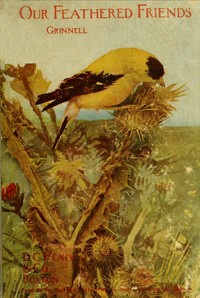
Our Feathered Friends — Text and Context can be approached with a clearer sense of reading commitment from its source measurements: 37,768 words, 2 hr 45 min estimated reading time, and 6 detected text sections.
The text analysis averages about 18.1 words per sentence, while the detected sections provide another way to judge how the source is divided.
Project Gutenberg metadata also associates the work with “Birds -- Juvenile literature,” connecting these edition facts with the source record’s subject description.
Explore this collection
These alternatives are selected using recorded categories and estimated reading time.
About 169 minutes
Birds
38,749 recorded words. 4 minutes difference from this book's estimate.
View Gutenberg source #46017About 169 minutes
Birds
38,780 recorded words. 4 minutes difference from this book's estimate.
View Gutenberg source #53307About 179 minutes
Birds
40,953 recorded words. 14 minutes difference from this book's estimate.
View Gutenberg source #46516Search stored excerpts and compare books → Choose by your preferences →
Choices use stored catalog measurements. Estimates vary with reading speed. A shared category is a catalog label, not a claim that two books have the same argument or literary quality.
Search reads excerpt text stored with this catalog and links to its associated Gutenberg record. The connection is stored in the site database; this tool does not recheck that every excerpt is word-for-word identical to that external record. Excerpt search does not cover every chapter and does not verify historical publication dates.
Catalog snapshot checked: 2026-09-26. Coverage: 99 public books, 99 available source excerpts.
Calculated from edition completeness, EPUB availability, text structure and catalogue metadata. Not a user rating.
Total of 100 points, scaled to a 2.5-5.0 range. Editions with an empty description or a missing EPUB file are not scored.
Public-domain source text
The source text is kept in the dedicated reader, separate from this catalogue record and its commentary.
The Grinnells open their book not with a dry list of species but with a vivid, almost theatrical scene: a screech owl discovered in a tree, surrounded by a cacophony of scolding birds. This episode, recounted in the first person, sets the pattern for the entire work—a blend of personal anecdote and natural history observation. The authors position themselves as active participants in the landscape, grabbing the owl by the legs and tail, then carrying it in a robin's cage to the back doorstep. The birds, in turn, become characters: they hold councils, post spies, and grow accustomed to the owl's presence over the summer. This narrative approach transforms field study into a shared drama.
The introduction shifts abruptly from the owl story to a polemic against feather-wearing and egg-collecting. The authors accuse both women and men of contributing to bird destruction—women through fashion, men through childhood cruelty and adult hunting. This movement from a specific, charming incident to a broader moral appeal is the book's central structural device. Each chapter likely follows a similar arc: a close observation of a bird's behavior, then a plea for its protection. The reader is never allowed to linger in pure wonder; the Grinnells repeatedly pull back to remind us of the stakes.
The screech owl episode is not just an opener; it establishes a key image that recurs throughout the excerpts. The owl's soft feathers, silent flight, and nocturnal habits are contrasted with the hawk's coarse feathers and swiftness. The authors use this comparison to illustrate different survival strategies, but also to humanize the owl: it spits like a cat, growls, and refuses to be petted. The owl becomes a symbol of wildness that cannot be tamed, a creature that must be released. This image of captivity and release may echo through later chapters, reinforcing the message that birds belong in the wild.
The Grinnells frequently shift between the microscopic and the macroscopic. In the owl scene, they zoom in on the owl's claws pinning a mouse to the roost, then zoom out to the entire neighborhood of birds gathering. This technique appears again in the introduction, where a single farmer's land is discussed as a potential bird sanctuary, then the scope widens to national school programs. The book's structure mirrors this movement: it alternates between close-up portraits of individual birds and broad calls for conservation action. This oscillation keeps the reader engaged at both the intimate and the societal level.
The authors are not passive recorders; they intervene. They grab the owl, keep it in a cage, feed it mice, and eventually let it go. They note that the birds 'told us where he was' throughout the summer, implying a communication between humans and birds. This active, participatory stance is central to the book's method. The Grinnells model how to observe without being destructive—they catch the owl but do not harm it, they teach it to eat from a stick but do not force affection. The reader is invited to adopt a similar role: curious, hands-on, but ultimately respectful of the bird's autonomy.
Readers will find that the Grinnells' book rewards attention to its structure as much as to its facts. The movement between narrative and argument, the recurring image of the captive owl, and the shifting scales of observation all serve a single purpose: to make the reader an active participant in bird conservation. Approach each chapter as a scene in a larger drama, and note how the authors use specific details—a mouse eaten over three hours, a spy bird's shrill call—to build a case for protection that is both emotional and rational.
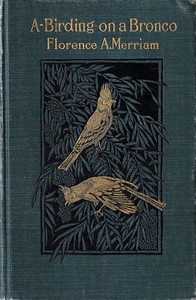
The Grinnells’ careful weaving of scene and study in Our Feathered Friends lingered with me, that gentle shift between watching and understanding. It brought back another quiet volume, A-Birding on a Bronco — Themes and Context, where the same unhurried patience rides through every page. Both feel less like guides and more like a calm afternoon spent simply looking, then thinking.
Your answers remain private and are stored only in this browser.