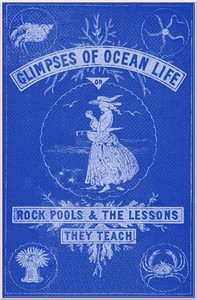
Glimpses of Ocean Life; Or, Rock-Pools and the Lessons they Teach — A Reader’s Guide

(0 User reviews)   20
In Category - Animals
Harper, John Project Gutenberg 2016 Not confirmed
Animal behavior; Marine animals -- Juvenile literature Readers of public-domain and historical texts
Project Gutenberg digital edition en

Edition facts

Words 76,482
Reading time 333 min
Text sections 11

The catalog record for Glimpses of Ocean Life; Or, Rock-Pools and the Lessons they Teach — A Reader’s Guide provides practical reading context through 76,482 words, 5 hr 33 min estimated reading time, and 11 detected text sections.

The text analysis averages about 25.2 words per sentence, while the detected sections provide another way to judge how the source is divided.

Project Gutenberg metadata also associates the work with “Animal behavior,” connecting these edition facts with the source record’s subject description.

John Harper's 1850s natural history book uses vivid anecdotes and precise observation to describe marine life in rock-pools, emphasizing the author's personal struggles with specimen collection and his view of nature as a handmaiden to religion.
Share
Editorial Edition Score 4.8/5

Calculated from edition completeness, EPUB availability, text structure and catalogue metadata. Not a user rating.

How this score is calculated
  • Description quality20 pts
  • Title & short description10 pts
  • Source metadata20 pts
  • Text length15 pts
  • Chapters / structure15 pts
  • EPUB file integrity20 pts

Total of 100 points, scaled to a 2.5-5.0 range. Editions with an empty description or a missing EPUB file are not scored.

Edition quality

Read the Text

ON THE PLEASURES DERIVED FROM THE STUDY OF MARINE ZOOLOGY. Page

Introduction--Two classes of readers--Marine zoology as an amusement--The botanist and his pleasures--Entomological pursuits--Hidden marvels of nature--The little Stickleback--Conclusion, 17

A GLANCE AT THE INVISIBLE WORLD.

Microscopic studies--When to use the microscope--Modern martyrs of science--Infusoria--Use of Infusoria--Distinction between plants and animals--_Vorticella_--_Rotatoria_--Wheel animalcules--Mooring Thread of Vorticellæ--A compound species of Vorticella described--_Zoothamnium spirale_ of Mr. Gosse--Nature's scavengers, 27

Animal-flowers--_A. mesembryanthemum_--'Granny,' Sir J. Dalyell's celebrated anemone--Original anecdote--_A. troglodytes_--How to capture actiniæ--A roving 'mess.'--An intelligent anemone--Diet of the actiniæ--Voracity of these zoophytes--Defence of certain species--Actiniæ eating crabs--Their reproductive powers--Size of the 'crass.'--The Plumose anemone--Its powers of contraction, 45

EDIBLE CRAB--SHORE CRAB--SPIDER CRAB, ETC.

The Partane--Its character defended--Crustaceous demons--The wolf and the lamb--Interesting anecdote--Reason and instinct--Anecdote of the Shore crab--'The creature's run awa''--A crustaceous performer--The Fiddler crab--A little prodigal--Singular conduct of the Shore crab--The minute Porcelain crab--_Maia squinado_--_Hyas araneus_--_Maia_ and _C. mænas_--Anecdote--The common Pea crab--Pinna and Pinnotheres--The Cray fish--Masticatory organs of crabs--Fishing for crabs--Crab fishers, 63

Enthusiastic students of nature--Aristocratic Hermit crabs--Swammerdam--Hermit crab and its habits--Anecdote--The Hermit in a fright--Soldier crab and Limpet--A crustaceous Diogenes--Prometheus in the tank--The martyr Hermit crab--The author's pet Blenny--Anecdote, 89

EXUVIATION OF CRUSTACEA (THE PHENOMENA OF CRABS, ETC., CASTING THEIR SHELLS).

The Tower of London--A crustaceous armory--The author's experience on the subject--Reamur and Goldsmith--Rejected shells of crabs--Anecdote--Hint to the young aquarian--Exuviation described from personal observation in several instances--Renewal of injured limbs--Frequency of exuviation--Effect of diet on crustacea--Exuviation arrested--Exuviation of the Hermit crab--How the process is effected, 109

Habits of the Prawn--The Common Shrimp--How to catch shrimps--Conclusion, 135

ACORN-BARNACLES--SHIP-BARNACLES.

The Common Barnacle described--Exuviation of the _Balani_--Anecdote--The Ship Barnacle--Barnacle Geese, 143

PHYLLODOCE LAMINOSA (THE LAMINATED NEREIS).

A rainy day at the sea-shore--Laminated Nereis--Its tenacity of life--Its unsuitableness for the aquarium--How the young annelids are produced--Evidence of a French naturalist, 151

Its renewal of mutilated organs--How to accommodate this annelid in the tank--The 'case' of the Fan-Amphitrite, 159

Dr. Johnson and Bozzy--Habits of the Mussel--Marine 'at homes'--The Purpura and its habits--Enemies of the Mussel--Anecdote--Construction of the beard (or Byssus)--Author's experience--Anecdote of the mussel--Muscular action of its foot--Threads of the beard--The bridge at Bideford--Anecdote--The Mussel tenacious of life--The beard not poisonous--M. Quatrefage--Mussel beds of Esnandes--Branchiæ of the Mussel--Food of this bivalve, 163

TEREBELLA FIGULAS (THE POTTER).

Anecdote of the Potter--Its cephalic tentacula--Construction of its tubular dwelling--_Terebella littoralis_--Curious anecdote--Branchial organs of this annelid, 189

ACALEPHÆ (MEDUSÆ, OR JELLY-FISH).

Introduction--Jelly-fish--Whales' food--Lieutenant Maury--Appearance of the Greenland Seas--Sir Walter Scott--The girdle of Venus--The Beröe--_Pulmonigrade acalephæ_--Portuguese man-of-war--_Hydra-tuba_--Alternation of generations--Dr. Reid--_Modera-formosa_--_Cyanea capillata_--Conclusion, 201

Anecdote--Young Dorides--Doris spawn--_Nudibranchiate gasteropoda_--Dr. Darwin--Mr. Gosse--A black Doris--_Bêches de mer_--A Chinese dinner--Bird's nest soup, and Sea-slug stew, 221

THE CRAB AND THE DAINTY BEGGAR.

Anecdote--The Pholas and Shore-crab--The _hyaline stylet_--The dainty beggar--The gizzard of the Pholas--Of what use is the stylet? 233

THE PHOLAS, ETC. (ROCK-BORERS).

Pholades at home--Habits of the Pholas--_P. crispata_--The pedal organ--Finny gourmands--How is the boring operation performed?--Various theories on the subject--Mr Clark, Professor Owen--The Pholas at work--The boring process described from personal observation--Author's remarks on the subject--Pholas in the tank--Conclusion, 241

The Sea-mouse--Bristles of the aphrodite--Its beautiful plumage (?)--Its weapons of defence--The spines described--Shape of the aphrodite, &c., 263

The Coral polypes--The Lily-stars--St. Cuthbert's beads--_Pentacrinus europæus_--Rosy feather star _Ophiuridæ_--Brittle-stars--_Ophiocomo-rosula_--British asteridæ--_Uraster rubens_--Habits of this species--Submarine Dandos--Sir John Dalyell--Professor Jones--Star-fish feeding on the oyster--Bird's foot Sea-star--_Luidia fragillissima_--Cushion-stars--Professor Forbes, 269

Sea Urchins in the tank--Growth of the Echinus--Its hedgehog-like spines--Suckers and pores--Ambulacral tubes--Professor Agassiz--Movements of the Echinus--_Pedicellariæ_--Masticatory apparatus--Common Egg Urchin--_Echinus sphæra_--How to remove the spines--'Do you boil your sea eggs?'--The Green-pea Urchin--The Silky-spined Urchin--The Rosy-heart Urchin, 287

Its unattractive appearance out of water--Trepang--Several varieties eaten by the Chinese--Common Sea Cucumber--Habits of the Holothuriæ--Their self-mutilation and renewal of lost parts, 301

THE APLYSIA, OR SEA-HARE.

Anecdote--The Sea Hare plentiful at North Berwick--Its powers of ejecting a purple fluid at certain times--Sea Hares abhorred by the ancients--Professor Forbes--Spawn of the Aplysia, 307

Tubes of the _Serpulæ_--Dr. Darwin--The harbour of Pernambuco--Its wonderful structure--Reproduction of the _Serpulæ_--_Sabellæ_--Their sandy tubes, &c., 313

THE SOLEN, OR RAZOR FISH.

How it burrows in the sand--How specimens are caught--_Cum grano salis_--Bamboozling the Spout Fish--Amateur naturalists, and fishermen at the sea-shore, 321

A GOSSIP ON FISHES--INCLUDING THE ROCKLING, SMOOTH BLENNY, GUNNEL FISH, GOBY, ETC.

Punch's address to the ocean--Old blue-jackets and the 'galyant' Nelson--The ocean and its inhabitants--Life beneath the wave--Fishes the happiest of created things--A fishy discourse by St. Antony of Padua--Traveller's ne'er do lie?--The veracious Abon-el-Cassim--Do fishes possess the sense of hearing--Author's experience--An intelligent Pike fish--Dr. Warwick--The Blenny in its native haunts--A 'Little Dombey' fish--Anecdote--The Viviparous Blenny--The Gunnel fish--Five-bearded Rockling--Two-spotted Goby--Diminutive Sucker-fish--Montagu's Sucker--The Stickleback--Its nest-building habits described--Conclusion, 327

John Harper opens Glimpses of Ocean Life with a declaration that natural history is 'the appointed handmaiden of Religion,' a framing that shapes his detailed accounts of marine creatures. The book is built around Harper's own experiences—often frustrated—trying to capture specimens like the Terebella worm, which he admits he has 'never been successful' in catching despite multiple attempts. This personal, sometimes self-deprecating voice sets the work apart from dry taxonomic guides.

A Self-Deprecating Naturalist

Harper frequently inserts himself into the narrative, sharing his failures as readily as his successes. He recounts a six-mile journey to hunt the Terebella worm after reading a colleague's vivid description, only to fail again. When a friend finally captures one, Harper describes the event with evident envy, calling it 'a most rare prize.' This honesty about the difficulty of field work gives the book a grounded, relatable quality. He also includes a wry anecdote about a shore crab that 'run awa'' from a would-be captor, using colloquial dialect to add humor. Such moments reveal a writer who values the story of the hunt as much as the scientific facts.

The Terebella's Glass Mansion

One of the most striking passages describes a Terebella worm that, after being evicted from its tube, immediately crawled into a piece of glass tube offered by Harper's friend. The worm then built a new tube around the glass, using 'red, white, and blue material' from broken tile, pounded shells, and colored glass. Harper marvels that such a 'concourse of atoms' was never before combined in an annelid's tube. The image of a worm living in a transparent cylinder, with its crimson gills visible through the glass, exemplifies Harper's eye for the visually arresting. He describes the gills as resembling 'the perfect skeleton of a leaf' dyed crimson and in constant motion, blending scientific accuracy with poetic simile.

Microscopic Marvels and Moral Lessons

Harper devotes a chapter to the 'invisible world' of microscopic organisms, including Vorticella and rotifers, which he calls 'wheel animalcules.' He describes their 'mooring threads' and compound species with the same care he gives to larger animals. Yet he never forgets his religious framework: these tiny creatures are 'nature's scavengers,' part of a divine economy where every part is 'made subservient to the general good.' This dual focus—on precise observation and spiritual interpretation—characterizes the entire book. Harper also includes a chapter on jellyfish, quoting poetry about phosphorescent waves, and defends scientists against those who object to 'prying into the secrets of nature.'

Anecdotes of Crustacean Character

Harper's chapters on crabs and hermit crabs are rich with personality. He defends the edible crab's character, calls crustaceans 'demons,' and tells an anecdote of a 'fiddler crab' that performs. A hermit crab is described as 'a crustaceous Diogenes,' and one specimen becomes a 'martyr' in a tank. These anthropomorphic touches are balanced by detailed descriptions of masticatory organs and fishing methods. Harper also recounts a story of a 'little prodigal' shore crab, using biblical allusion to frame its behavior. The blend of scientific description and narrative flair makes these sections particularly engaging, though readers should note that the excerpts do not reveal the full arc of any single crab's story.

Harper's voice is the book's greatest asset: a blend of earnest piety, wry humor, and genuine wonder at the natural world. Readers interested in Victorian natural history writing will find here a less formal counterpart to Gosse or Darwin, one that values the failed expedition as much as the successful capture. Approach the book as a series of observational essays rather than a systematic guide, and you will appreciate its quirky charm.

That rainy afternoon, I kept returning to Harper’s frustration—how the clinging seaweed and skittering crabs resisted his careful jars, yet he called it all a lesson in patience. His reverence for small, stubborn life lingered. Later, flipping through a different shelf, the same quiet awe surfaced in The House Fly and How to Suppress It — Story, Setting & Ideas, where even a nuisance earns meticulous, almost tender study.

There are no reviews for this eBook.

0
0 out of 5 (0 User reviews )

Add a Review

Your Rating *
There are no comments for this eBook.

Reader reflection

What did you think of this book?

Answer a few questions and save a private reflection on this device.

Your progress 0 / 10
1

How far have you progressed with this book?

2

Did this book hold your interest?

3

Would you pass this book on to a friend?

4

What was the reading difficulty like?

Related eBooks