About 69 minutes
Mamma's Stories about Birds — Context and Discussion
Birds
15,835 recorded words. 1 minutes difference from this book's estimate.
View Gutenberg source #24378
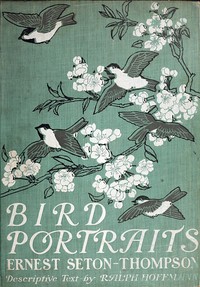
This digital edition of Bird Portraits — Text and Context is described by source-level measurements including 16,089 words, 1 hr 10 min estimated reading time, and 23 detected text sections.
The text analysis averages about 27.9 words per sentence, while the detected sections provide another way to judge how the source is divided.
Project Gutenberg metadata also associates the work with “Birds,” connecting these edition facts with the source record’s subject description.
Explore this collection
These alternatives are selected using recorded categories and estimated reading time.
About 69 minutes
Birds
15,835 recorded words. 1 minutes difference from this book's estimate.
View Gutenberg source #24378About 69 minutes
Birds
15,727 recorded words. 1 minutes difference from this book's estimate.
View Gutenberg source #62490About 58 minutes
Birds
13,169 recorded words. 12 minutes difference from this book's estimate.
View Gutenberg source #59398Search stored excerpts and compare books → Choose by your preferences →
Choices use stored catalog measurements. Estimates vary with reading speed. A shared category is a catalog label, not a claim that two books have the same argument or literary quality.
Search reads excerpt text stored with this catalog and links to its associated Gutenberg record. The connection is stored in the site database; this tool does not recheck that every excerpt is word-for-word identical to that external record. Excerpt search does not cover every chapter and does not verify historical publication dates.
Catalog snapshot checked: 2026-09-26. Coverage: 99 public books, 99 available source excerpts.
Calculated from edition completeness, EPUB availability, text structure and catalogue metadata. Not a user rating.
Total of 100 points, scaled to a 2.5-5.0 range. Editions with an empty description or a missing EPUB file are not scored.
Public-domain source text
The source text is kept in the dedicated reader, separate from this catalogue record and its commentary.
Ralph Hoffmann's introduction to Bird Portraits frames the book as a collaboration between artist and naturalist: Seton-Thompson's pictures are described as "faithful and charming portraits," while Hoffmann's text provides "a short account of some of the main events of the bird's life." The introduction explicitly states that learning about the perils wild creatures face will encourage readers to protect songbirds. This dual purpose—artistic appreciation and conservation—shapes the entire work.
The book is organized seasonally, beginning with birds associated with spring, moving to early summer species, and concluding with those that endure northern winters. This structure is announced in the introduction, giving readers a clear framework for the portraits that follow.
The first portrait, of the Song Sparrow, opens with a vivid seasonal image: after a severe winter, while snow and ice remain, the bird mounts to a bush or small tree and repeats its "cheerful tinkling song." Hoffmann quotes Thoreau's phrase about "helping to crack the ice" in the ponds. This is not mere description—it establishes the sparrow as a herald of spring, a role reinforced by the book's seasonal arrangement.
The excerpt notes a peculiarity of the song: variation among individuals and even within the same bird. Hoffmann observes that along a bushy roadside, one encounters Song Sparrows at regular intervals, each restricted to its own territory. This attention to individual variation and spatial distribution is a recurring pattern in Hoffmann's text, blending natural history with behavioral observation.
For a first reader, this opening portrait sets expectations: each entry will combine a specific seasonal moment, a distinctive behavior, and a touch of literary reference. The Song Sparrow's song is not just described but situated in the landscape and in the listener's experience.
The excerpt on the Ruby-Throated Hummingbird shifts focus from song to feeding behavior and migration. Hoffmann describes the bird's method of obtaining nectar and its habit of visiting sap wells drilled by the Yellow-bellied Woodpecker. The scene is communal: "while the Woodpecker is drinking on one side of the tree, butterflies, bees, wasps, and Humming-birds are fluttering about the other." This ecological snapshot shows Hoffmann's interest in interspecies interactions.
The text then notes the hummingbird's migration southward by the end of September, returning in May when the Japan quince blossoms open. Hoffmann adds a taxonomic detail: the Ruby-throated is the only species on the Atlantic coast, and the female lacks the ruby throat, sometimes causing misidentification. He warns that hummingbirds seen at dusk may actually be clear-winged moths.
The passage concludes with a broader perspective: in South America, over four hundred species exist, and a museum case full of them is "a marvel of beauty and interest." This move from local observation to global context is characteristic of Hoffmann's approach, grounding wonder in factual detail.
The Bob-White portrait takes a markedly different tone, opening with a stark contrast: "For one that we see alive, we see a thousand hanging, bloody and bedraggled, in the markets." Hoffmann directly addresses the reader's complicity in the bird's fate, arguing that those who become acquainted with Bob-white—seeing him on a stone wall or his mate hurrying young into blackberry vines—will not want to eat him.
The text enumerates threats beyond hunting: midwinter blizzards can bury entire coveys, as Hoffmann illustrates with a striking image of quail found huddled in a circle after a storm, "like the people of Pompeii buried under the falling ashes." This simile is the most literary in the excerpts, underscoring the fragility of the bird's existence.
Hoffmann also describes the male's call, translated as "Bob-white" or "More wet," and notes that it serves both to summon a female and challenge other males. The portrait thus combines behavioral detail, conservation advocacy, and a vivid sense of mortality—a reminder that the book's purpose is not only to describe but to protect.
Across the three excerpts, Hoffmann's voice is consistent: precise, observant, and occasionally moralistic. He uses the present tense for general behaviors ("the Song Sparrow... repeats his cheerful tinkling song") and shifts to past tense for specific events ("the melting snow exposed a circle of quail"). This alternation creates a sense of timeless natural patterns punctuated by particular incidents.
The portraits vary in length and emphasis. The Song Sparrow entry focuses on song and territory; the Hummingbird on feeding and migration; Bob-White on conservation and mortality. This variety prevents monotony and reflects the different ways birds engage human attention—through sound, sight, or ethical concern.
Hoffmann frequently includes the reader as a participant: "Few people are so unobservant as not to notice this bright strain"; "Most people are only too familiar with this bird, but not as he looks in life." This rhetorical strategy invites the reader to see birds anew, aligning with the book's stated goal of fostering protection through acquaintance.
Reading Bird Portraits sequentially reveals a deliberate arc from spring to winter, from song to silence, from wonder to warning. Hoffmann's text, though brief for each species, consistently moves from specific observation to broader implication—whether ecological, aesthetic, or ethical. The book rewards readers who attend to these shifts in tone and focus, as they reflect the varied relationships humans have with the birds around them.
Hoffmann’s gentle notes on the Song Sparrow’s return always felt like a quiet hand on my shoulder, pointing at the season’s turning. That same patient attention lives in Ornithological biography, Vol. 3 (of 5) — A Closer Reading, where every feather and flight is given room to breathe. Some books simply listen to the birds together, old friends sharing a bench.
Save your reaction, strongest insight, and memorable passage.