About 59 minutes
Humpback Whales in Glacier Bay National Monument, Alaska — Text and Context
Marine Life
13,509 recorded words. 27 minutes difference from this book's estimate.
View Gutenberg source #37101
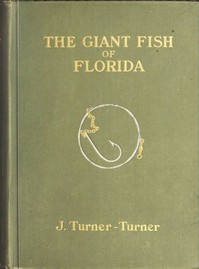
The catalog record for The Giant Fish of Florida — A Reader’s Guide provides practical reading context through 19,677 words, 1 hr 26 min estimated reading time, and 4 detected text sections.
The text analysis averages about 23.9 words per sentence, while the detected sections provide another way to judge how the source is divided.
Project Gutenberg metadata also associates the work with “Fishing -- Florida,” connecting these edition facts with the source record’s subject description.
Explore this collection
These alternatives are selected using recorded categories and estimated reading time.
About 59 minutes
Marine Life
13,509 recorded words. 27 minutes difference from this book's estimate.
View Gutenberg source #37101About 59 minutes
Marine Life
13,555 recorded words. 27 minutes difference from this book's estimate.
View Gutenberg source #72582About 116 minutes
Marine Life
26,473 recorded words. 30 minutes difference from this book's estimate.
View Gutenberg source #34787Search stored excerpts and compare books → Choose by your preferences →
Choices use stored catalog measurements. Estimates vary with reading speed. A shared category is a catalog label, not a claim that two books have the same argument or literary quality.
Search reads excerpt text stored with this catalog and links to its associated Gutenberg record. The connection is stored in the site database; this tool does not recheck that every excerpt is word-for-word identical to that external record. Excerpt search does not cover every chapter and does not verify historical publication dates.
Catalog snapshot checked: 2026-09-26. Coverage: 99 public books, 99 available source excerpts.
Calculated from edition completeness, EPUB availability, text structure and catalogue metadata. Not a user rating.
Total of 100 points, scaled to a 2.5-5.0 range. Editions with an empty description or a missing EPUB file are not scored.
Public-domain source text
The source text is kept in the dedicated reader, separate from this catalogue record and its commentary.
J. Turner-Turner opens The Giant Fish of Florida by placing his subject firmly in the realm of big-game hunting at sea, comparing the pursuit of tarpon and Gulf rangers to the land-based sport familiar to British anglers. The preface immediately establishes a practical, first-hand tone: the author has fished these waters, and his notes are drawn from direct experience rather than exhaustive natural-history catalogues. He credits Mr. F. G. Aflalo for arranging the manuscript and highlights the book’s 48 illustrations, all taken from natural (not mounted) fish using a careful arrangement of pegs and sheeting. This emphasis on photographic authenticity—combining the impressions of brush and camera—signals that the work values visual evidence as much as written instruction.
The preface is more than a courtesy; it frames the entire volume as a selective, sporting-focused companion. Turner-Turner explicitly declines to compile an exhaustive list of Florida sea fish, directing readers to Jordan and Evermann’s authoritative works instead. He names only those fish likely to attract an angler’s notice, and treats them from a sporting rather than a natural-history perspective. This deliberate narrowing means the reader should expect practical advice on tackle, technique, and quarry behavior, not encyclopedic taxonomy. The author also acknowledges that many visitors fish exclusively for tarpon, missing opportunities on rougher days—a hint that the book will advocate for variety. The mention of Mr. Grenfell’s tunny fishing in the Mediterranean further situates the work within a transatlantic sporting conversation, suggesting that Florida’s giants are part of a larger big-game tradition.
Chapter VIII offers a detailed, step-by-step account of spearing loggerhead turtles, revealing the author’s methodical approach. He distinguishes the loggerhead from the rarer green turtle and the leathery species, and stresses the importance of a small, sharp harpoon when switching from rays to turtles. The narrative is rich with practical warnings: stand motionless in a slight lop, creep up without noise, and resist the urge to strike too early. The most favorable moment is when you are closest to the quarry. Turner-Turner describes the turtle’s behavior—it may stay submerged for twenty minutes—and advises a second strike if the first seems shallow. The passage culminates in a vivid caution: a heavy loggerhead once drove an oar through the boat’s bottom, discovered only when the craft was a third full of water. Such anecdotes ground the instruction in real mishaps, reinforcing the need for careful preparation.
Throughout the excerpts, the author returns to the photographs as a point of pride. He claims they are “the most remarkable in their own way” that Mr. Aflalo had ever seen, achieved by arranging pegs and sheeting to support natural fish. This technical detail—using the natural, not mounted, specimen—suggests a commitment to documentary realism. The images are not merely decorative; they serve as proof of the fish’s size and form, complementing the written descriptions. For a first-time reader, the illustrations likely function as a visual field guide, helping to identify species like the whip ray leaping or the loggerhead turtle swimming. The author’s insistence on their correctness, combining the impressions of both brush and camera, indicates that he saw the photographs as integral to the book’s instructional value, not as afterthoughts.
Turner-Turner’s prose is direct and conversational, addressing the reader as “you” throughout the turtle chapter: “you must get in the way of standing motionless,” “you think that it did not penetrate very far?” This second-person address creates the sense of a seasoned mentor speaking to a novice. The structure is chronological, moving from preparation to execution to aftermath, with digressions for safety tips. The author does not shy from admitting uncertainty—he notes that instinct is probably correct about a shallow strike—and offers the benefit of the doubt as a legitimate tactic. The closing anecdote about the oar-driven hole in the boat is told with dry humor (“the turtle had most of the fun to itself”), leavening the technical detail. For a reader new to the subject, this blend of instruction and anecdote makes the material accessible without sacrificing precision.
Readers approaching The Giant Fish of Florida for the first time will find a compact, purpose-driven manual that prioritizes practical know-how over academic breadth. The excerpts suggest that the book rewards attention to its procedural details—the correct harpoon for each quarry, the timing of strikes, the stowing of oars—as much as to its vivid descriptions of the Gulf environment. The photographs, though not reproduced in this digital edition, are clearly central to the author’s method of instruction. To get the most from the text, read the preface as a key to the author’s selective approach, and treat each chapter as a self-contained lesson that builds toward a fuller understanding of Florida’s giant fish.
Save your reaction, strongest insight, and memorable passage.