About 467 minutes
Citizen Bird: Scenes from Bird-Life in Plain English for Beginners — Reading Notes
Birds
107,338 recorded words. 5 minutes difference from this book's estimate.
View Gutenberg source #11896
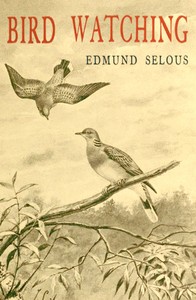
For Bird Watching — A Reader’s Guide, the stored edition analysis reports 106,151 words, 7 hr 42 min estimated reading time, and 12 detected text sections.
The text analysis averages about 31.3 words per sentence, while the detected sections provide another way to judge how the source is divided.
Project Gutenberg metadata also associates the work with “Birds,” connecting these edition facts with the source record’s subject description.
Explore this collection
These alternatives are selected using recorded categories and estimated reading time.
About 467 minutes
Birds
107,338 recorded words. 5 minutes difference from this book's estimate.
View Gutenberg source #11896About 344 minutes
Birds
79,014 recorded words. 118 minutes difference from this book's estimate.
View Gutenberg source #46425About 343 minutes
Birds
78,665 recorded words. 119 minutes difference from this book's estimate.
View Gutenberg source #3074Search stored excerpts and compare books → Choose by your preferences →
Choices use stored catalog measurements. Estimates vary with reading speed. A shared category is a catalog label, not a claim that two books have the same argument or literary quality.
Search reads excerpt text stored with this catalog and links to its associated Gutenberg record. The connection is stored in the site database; this tool does not recheck that every excerpt is word-for-word identical to that external record. Excerpt search does not cover every chapter and does not verify historical publication dates.
Catalog snapshot checked: 2026-09-26. Coverage: 99 public books, 99 available source excerpts.
Calculated from edition completeness, EPUB availability, text structure and catalogue metadata. Not a user rating.
Total of 100 points, scaled to a 2.5-5.0 range. Editions with an empty description or a missing EPUB file are not scored.
Public-domain source text
The source text is kept in the dedicated reader, separate from this catalogue record and its commentary.
Edmund Selous opens Bird Watching with a careful disclaimer: his observations are his own, and any remark that a bird acts in a certain way means only that he has seen it do so on one or more occasions. This self-imposed limitation shapes the entire work, giving it the feel of a field notebook rather than a general treatise. The prose is immediate—notes were made during or just after each event—and the voice is that of a patient, curious watcher who is unafraid to admit uncertainty. In the guillemot passage, for instance, he describes a chick being fed a sand-eel, noting that he cannot quite see whether the fish is dropped or placed in the bill. Such moments of honest hesitation lend credibility to the detailed scenes he does capture.
Selous’s preface establishes a distinctive narrative stance. He writes that it is often difficult to avoid making general statements, but he wishes it understood that his remarks are always particular: “a remark that any bird acts in such or such a way means, merely, that I have, on one or more occasions, seen it do so.” This epistemological caution is not merely a disclaimer; it permeates the prose. When describing guillemots on a ledge, he notes that the number of birds “will be found to be approximately the same” each time they are counted—a phrasing that reflects repeated, verifiable observation rather than a claim about fixed behavior. Similarly, he remarks on the disparity in laying times among puffins, adding “so far as I have been able to observe,” a qualifier that keeps the statement anchored to his own experience. The result is a voice that feels both authoritative and humble, inviting readers to trust the details precisely because the author acknowledges the limits of his knowledge.
The extended guillemot passage reveals Selous’s skill at rendering subtle interactions. He describes paired birds cosseting each other with the tips of their bills, the female bending her head with “an expression as of submitting to an enjoyment.” The chick is often invisible, hidden under a parent’s wing, and Selous notes that the transfer of the chick from one bird to another happens “quite invisibly, as far as the chick is concerned.” He uses this limitation to create tension: the reader sees only what the watcher sees. When a bird brings a fish, the chick becomes visible only momentarily, its throat moving “as though swallowing something down.” Selous’s language is precise—he speaks of the parent making “a kind of little tent or awning” with her wings—and his comparisons are apt, likening the chick being sat upon to the suppressed guinea-pigs in Alice in Wonderland. The scene is built from small, concrete actions: the nibbling, the shifting, the drooping of wings. It is a model of how to describe behavior without over-interpreting it.
The narrative pace in Bird Watching varies with the subject. In the guillemot section, time slows: a single feeding sequence is drawn out over several paragraphs, with each gesture—the bending of the head, the raising of the bill—given its own moment. Elsewhere, the pace quickens. The table of contents lists chapters on watching great plovers, ringed plovers, redshanks, peewits, stock-doves, wood-pigeons, snipe, wheatears, dabchicks, oyster-catchers, gulls, skuas, ravens, curlews, eider-ducks, shags, guillemots, birds at a straw-stack, birds in the greenwoods, rooks, blackbirds, nightingales, and sand-martins. This variety suggests shifts in tempo: a chapter on rooks may involve sustained observation of a single flock, while one on birds at a straw-stack might capture quick, opportunistic visits. Selous’s prose adapts accordingly, sometimes lingering, sometimes moving briskly. The reader is encouraged to attend to these changes in rhythm as part of the experience of watching.
Selous’s Bird Watching rewards a patient reading that mirrors the patience of the observer. The book is best approached not as a systematic guide but as a series of discrete, vivid encounters. Pay attention to the qualifiers—the “I think,” “it would seem,” “as far as I have been able to observe”—for they mark the boundaries of what can be known from a single vantage point. The illustrations by Joseph Smit, listed in the front matter, offer visual counterparts to the textual scenes. Reading with a map of the British coast and a willingness to sit with uncertainty will deepen the experience.
The rain kept me indoors, and I lost an afternoon to Edmund Selous’s careful guillemot notes—his insistence that he only records what he saw, nothing more. That honesty lingered. Later, half-dozing, I pulled down The Burgess Bird Book for Children — Context and Discussion, and found the same patient watching, softened into story. One book simply opened into the other, like a window left ajar.
Build a private reading journal entry for this title.