
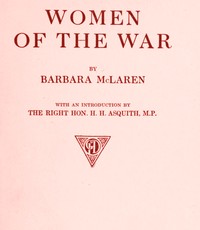
Women of the war by Barbara McLaren
Most history books about World War I focus on the front lines. Barbara McLaren, writing in 1917 while the war was still raging, did something different. She turned her attention to the home front, specifically to the women who were holding everything together.
The Story
This isn't a single narrative with a main character. Think of it more as a series of snapshots or interviews. McLaren gathers stories from across Britain and France. We meet the 'land girls' learning to plow fields for the first time. We stand with nurses in overcrowded hospitals, dealing with horrors they were never prepared for. We see women in munitions factories, their hands stained yellow from TNT, working long hours in dangerous conditions. We read about mothers managing households alone, dealing with rationing and constant fear for their sons and husbands. The book moves from these personal stories to the bigger picture—how women's organizations formed, how they took over jobs no one thought they could do, and how their contribution became essential for national survival.
Why You Should Read It
What makes this book special is its immediacy. McLaren wasn't looking back from a distance of decades; she was reporting on a current event. You feel the urgency, the patriotism, but also the sheer exhaustion and resolve in these accounts. It shatters the old-fashioned image of women from this era as just passive bystanders. These pages are filled with competence, courage, and heartbreaking resilience. It’s not about famous names, but about ordinary people doing extraordinary things out of necessity. It quietly shows how this mass mobilization of women planted the seeds for huge social changes that would come after the armistice.
Final Verdict
Perfect for anyone who feels like history can be too much about dates and treaties and not enough about people. If you enjoyed the personal perspectives in books like 'The Diary of a World War I Nurse' or the human focus of a Ken Burns documentary, you'll connect with this. It's a short, powerful reminder that behind every major historical event are millions of untold stories, and this book gives voice to a few of them. It’s essential reading for understanding the full, human cost of the war—a cost paid just as heavily at home as it was on the battlefield.
You are viewing a work that belongs to the global public domain. You do not need permission to reproduce this work.


Andrew Hernandez
3 months agoText is crisp, making it easy to focus.