
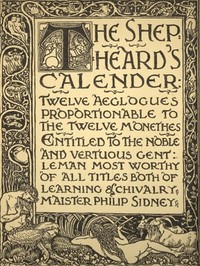
The Shepheard's Calender: Twelve Aeglogues Proportionable to the Twelve…
Published in 1579, The Shepheard's Calender was Edmund Spenser's debut, and he made sure everyone noticed. It's structured as twelve poems, or 'eclogues,' each named for a month of the year. In each one, a different pair of shepherds meets up and talks. Their conversations are the whole story.
The Story
The plot isn't a single narrative, but a cycle of moods and debates that mirror the changing seasons. In spring, you get the lovelorn Colin Clout (Spenser's stand-in) pining for his Rosalind. Summer brings religious tension, as shepherds argue about corrupt clergy. Autumn shifts to a playful singing contest about love. Winter closes the year with themes of loss, aging, and death. A character named Hobbinol often shows up to offer Colin friendly advice he mostly ignores. The year—and the book—ends on a quiet, reflective note, having run through the full emotional gamut of human experience.
Why You Should Read It
Don't let the 'shepherd' thing fool you. This book is alive with ambition and cleverness. Spenser uses this simple setting to talk about huge, risky topics: the pressure at court, the state of the church, the pain of unrequited love. Reading it, you feel like you're getting a secret, coded look at the 16th century. Yes, the old English takes some getting used to (thank goodness for footnotes!), but the voices of the shepherds are so distinct and their concerns so real—pride, heartbreak, faith—that they break through the centuries. You're witnessing a young poet flexing every muscle he has, inventing words, and boldly claiming his place beside the greats.
Final Verdict
This is for the curious reader who loves a project. It's perfect for poetry fans who want to see where epic poems like The Faerie Queene began, for history lovers who enjoy seeing an era's anxieties play out in art, and for anyone who appreciates brilliant, layered writing. It's not a breezy beach read; it's a conversation with a genius from 450 years ago. If you're willing to lean in and listen, it's an incredibly rewarding one.
You are viewing a work that belongs to the global public domain. Distribute this work to help spread literacy.





Jennifer Gonzalez
1 year agoI didn't expect much, but the storytelling feels authentic and emotionally grounded. I couldn't put it down.