
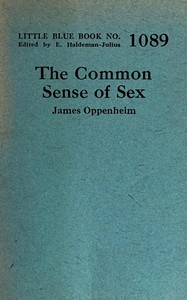
The common sense of sex by James Oppenheim
James Oppenheim's 'The Common Sense of Sex' isn't a novel with a plot in the traditional sense. Think of it less as a story and more as a direct conversation, a fiery speech put to paper. Published in 1911, it's a work of social criticism that tackles the biggest, most personal issues of its day: marriage, sexuality, and women's place in the world.
The Story
There's no protagonist to follow here. Instead, Oppenheim builds his case like a lawyer arguing before a jury. He lays out the problems of the traditional, Victorian-style marriage, which he saw as a kind of economic and sexual slavery for women. He talks about the dangers of unwanted pregnancy, the lack of access to birth control, and the social shame that trapped women. The "story" is the journey of his argument—from diagnosing a sick society to prescribing a cure based on freedom, honesty, and economic independence for women.
Why You Should Read It
Reading this book is a trip. The language is of its time, but the ideas feel startlingly modern. It's one thing to know that early feminists fought for the vote; it's another to read someone from 1911 arguing so clearly for bodily autonomy and sexual liberation. It shatters the dusty, polite image we often have of that era. You'll find yourself highlighting passages and thinking, "He really wrote this in 1911?" It provides incredible context for the struggles that came later and reminds you how long and deep these roots of protest go. It's also a powerful lesson in how radical ideas sound in their own time.
Final Verdict
This book is perfect for anyone interested in the history of feminism, social movements, or ideas. It's for readers who enjoy primary sources that let you hear a voice from the past, raw and unfiltered. If you liked the ideas in something like The Feminine Mystique but want to see where some of those thoughts began, this is a fascinating prequel. Be warned: it's a polemic, not a beach read. But if you're ready for a challenging, eye-opening, and genuinely surprising piece of history, 'The Common Sense of Sex' is a forgotten gem worth rediscovering.
Legal analysis indicates this work is in the public domain. Knowledge should be free and accessible.









Richard Lopez
2 years agoIf you enjoy this genre, the atmosphere created is totally immersive. I couldn't put it down.