
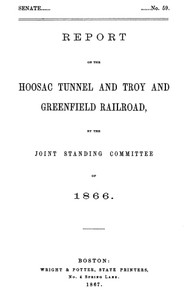
Report of the Hoosac Tunnel and Troy and Greenfield Railroad, by the Joint…
Let's set the scene. It's the 1850s, and Massachusetts wants a railroad line connecting Boston to the west. The problem? The Hoosac Mountain, a massive wall of rock. The solution? Build one of the longest tunnels in the world through it. What could go wrong? As it turns out, everything. The project, run by the Troy and Greenfield Railroad, quickly became a money pit and a political scandal. Years dragged on, millions of dollars vanished, and the tunnel was barely started. The public was furious, demanding answers.
The Story
This book is the answer. The state appointed a special joint committee to investigate, and this is their official report. It's not a narrative with characters in the traditional sense. Instead, the "characters" are the staggering numbers, the failed engineering plans, and the questionable contracts. The "plot" is the committee meticulously following the money, interviewing everyone from contractors to state officials, and piecing together a story of optimism, technical hubris, and financial mismanagement. The tension comes from watching them uncover the sheer scale of the disaster and point fingers at the decisions that led there.
Why You Should Read It
I picked this up expecting a snooze and found it weirdly gripping. It's a raw look at how big infrastructure projects can spiral out of control. You see the clash between grand vision and gritty reality. There's drama in the cold, hard facts: the cost of a single blast, the wages for workers deep in the dark, the bills for machinery that didn't work. It makes you think about every modern megaproject and wonder what the future's investigative reports will say. It's also a lesson in accountability—or the struggle to achieve it—told through balance sheets and witness testimony.
Final Verdict
This is a niche read, but a fascinating one. It's perfect for history buffs who love primary sources, true crime fans who enjoy financial mysteries, or anyone interested in the messy, unglamorous underbelly of American progress. You won't get flowing prose or personal dramas, but you will get an authentic, unfiltered snapshot of a monumental failure. If you've ever looked at a big public works project and thought, "How did this cost so much?" this book from 1863 provides a very old, very detailed answer.
This content is free to share and distribute. Distribute this work to help spread literacy.
Mary Miller
9 months agoFive stars!


Anthony Harris
1 year agoI came across this while browsing and the emotional weight of the story is balanced perfectly. Definitely a 5-star read.