
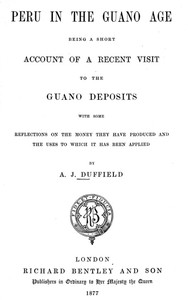
Peru in the Guano Age by A. J. Duffield
Let's be clear: this isn't a novel. It's history, but it has all the twists of a great drama. A. J. Duffield, who was there at the time, pieces together the rise and catastrophic fall of Peru's guano fortune.
The Story
In the mid-19th century, Peru discovered it was sitting on literal gold mines of guano—centuries of accumulated bird droppings on rocky islands off its coast. When the world realized this was a miracle fertilizer, a frenzy began. The Peruvian government made deals, sold licenses, and watched money pour in from Europe and North America. For a few decades, it funded grand projects and lined pockets. But Duffield shows how the promise curdled. The work was brutal, often relying on forced labor. The profits were squandered or stolen by a small elite. Instead of investing in the country, the government took out massive loans using future guano sales as collateral. When the guano started to run out and synthetic fertilizers were invented, Peru was left with crippling debt, a ravaged environment, and little to show for its once-in-a-lifetime windfall.
Why You Should Read It
Duffield isn't a detached academic. His writing has the urgency of someone who saw the waste and wanted to sound an alarm. What hooked me was how familiar it all feels. This is a classic 'resource curse' story, long before we had a name for it. It's about how easy money can corrupt a political system and how a boom can blind everyone to the coming bust. The characters—the greedy contractors, the hopeful politicians, the suffering workers—feel very real. You keep reading, hoping Peru will make a smarter choice, knowing it probably won't. It's a frustrating, fascinating, and deeply human story of missed opportunities.
Final Verdict
This book is perfect for anyone who loves narrative history that explains the present. If you've ever wondered why some resource-rich countries struggle, this 19th-century case study is a brilliant place to start. It's also a great pick for readers who enjoy business stories about spectacular failures, or for anyone with a curiosity for the strange, impactful corners of history. It's not a light beach read, but it's a compelling and surprisingly fast-paced dive into a chapter of history that proves truth is often stranger—and more dramatic—than fiction.
This masterpiece is free from copyright limitations. Use this text in your own projects freely.

Emily Robinson
2 years agoFrom the very first page, the depth of research presented here is truly commendable. I learned so much from this.