
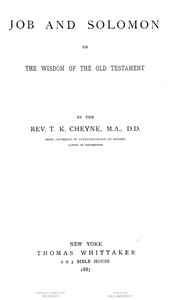
Job and Solomon: Or, The Wisdom of the Old Testament by T. K. Cheyne
So, what is this book actually about? It's not a novel with a plot, but an investigation. T.K. Cheyne, writing in 1887, takes two of the most philosophically intense books of the Hebrew Bible—Job and Ecclesiastes—and subjects them to the critical scholarship of his day.
The Story
There's no traditional story here. Instead, Cheyne walks us through his analysis. He looks at the Book of Job, the famous tale of a righteous man who loses everything. Cheyne isn't just interested in the moral; he's picking at the seams of the text. He suggests parts might be from different authors or times, and he tries to figure out what the original, core message about suffering and faith might have been before later edits. Then he turns to Ecclesiastes, the book that famously says 'all is vanity.' He treats its skeptical, world-weary voice not as a mistake, but as a crucial part of biblical wisdom. Cheyne's 'story' is the story of his own search for understanding, using the best tools he had.
Why You Should Read It
Here's the cool part: this book is a time capsule of thought. Reading Cheyne is like sitting down with a brilliant, late-Victorian thinker who loves the Bible but isn't afraid to ask hard questions. You get to see how biblical scholarship worked before modern archaeology and discoveries. His conclusions might feel dated now, but his passion for the subject and his intellectual honesty are completely fresh. He treats Job and Ecclesiastes not as simple comfort, but as complex, sometimes troubling, dialogues about the biggest issues we face. It makes these ancient texts feel alive and urgent.
Final Verdict
This is a niche read, but a great one for the right person. It's perfect for history buffs, armchair theologians, or anyone who enjoys seeing how people in the past grappled with faith and doubt. It's not for someone looking for light devotional reading or a simple explanation. It's for the curious reader who wants to think deeply, doesn't mind some old-fashioned academic language, and would enjoy a journey into the mind of a 19th-century scholar confronting the 'wisdom literature' head-on. Think of it as a challenging conversation with a very smart friend from another era.
This masterpiece is free from copyright limitations. It is now common property for all to enjoy.
Richard Smith
9 months agoI appreciate the objective tone and the evidence-based approach.
Thomas Harris
2 years agoThe peer-reviewed feel of this content gives me great confidence.
Donald Thomas
2 years agoAs a professional in this niche, the author clearly has a deep mastery of the subject matter. A perfect balance of theory and practical advice.
Robert Young
1 year agoTo be perfectly clear, the storytelling feels authentic and emotionally grounded. Worth every second.
Margaret Moore
11 months agoI found the author's tone to be very professional yet accessible, the cross-referencing of different chapters makes it a great study tool. I'm genuinely impressed by the quality of this digital edition.