
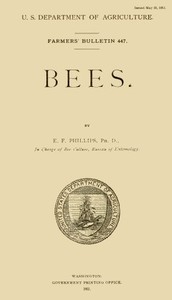
Bees by Everett Franklin Phillips
Let's be clear from the start: this is not a storybook. If you're looking for a novel about a plucky beekeeper saving the hive, you won't find it here. 'Bees' by Everett Franklin Phillips is a practical manual, first published in 1915 by the U.S. Department of Agriculture. But don't let that official origin fool you—it's a fascinating and accessible read.
The Story
There's no plot in the traditional sense. Instead, Phillips acts as your guide on a complete tour of the honeybee's world. He starts with the bee itself, explaining the distinct roles of the queen, workers, and drones in clear, simple language. He then walks you through the entire life cycle, from egg to adult. The second half of the book is a straightforward primer on beekeeping. He covers everything: different hive designs (like the classic Langstroth hive), how to safely work with your bees, how to harvest honey and wax, and even how to handle common problems and pests. It's a step-by-step guide written at a time when homesteading and self-sufficiency were common goals.
Why You Should Read It
I loved this book for its perspective. Reading it today is a humbling experience. Phillips writes with a calm, assured authority, explaining concepts that were probably new to many farmers of his day. For us now, it's a snapshot of a simpler, more direct relationship with nature. There's no talk of colony collapse disorder or modern pesticides—just solid, foundational knowledge. It reminds you that understanding an insect this important shouldn't be specialized knowledge. The book's tone is patient and encouraging, like a teacher who truly believes anyone can learn this. It made me appreciate the incredible complexity of a beehive as a single, functioning organism.
Final Verdict
This book is perfect for curious beginners. If you're a gardener who wants to support pollinators, a history fan interested in early 20th-century farming, or someone who's just bought their first hive and wants a no-nonsense historical reference, you'll get a lot out of it. It's not light bedtime reading, but it's surprisingly engaging. Think of it as the essential 'Bee 101' textbook, written by a kind and knowledgeable professor from the past. Keep your phone handy to look up the few outdated terms, but the core wisdom is timeless.
The copyright for this book has expired, making it public property. Share knowledge freely with the world.
Mary Johnson
5 months agoThis digital copy caught my eye due to its reputation, the concise summaries at the end of each section are a lifesaver. Top-tier content that deserves more recognition.
Paul Brown
8 months agoThis is an essential addition to any academic digital library.
Sarah Jones
5 months agoThis digital copy caught my eye due to its reputation, the narrative arc keeps the reader engaged while delivering factual content. This should be on the reading list of every serious professional.
Nancy Williams
5 months agoMy first impression was quite positive because the language used is precise without being overly academic or confusing. A refreshing and intellectually stimulating read.


David Lee
1 year agoUnlike many other resources I've purchased before, the way the author breaks down the core concepts is remarkably clear. I'll be citing this in my upcoming project.